Interior Commercial Lighting: What to Check When Comparing Hotel and Residential Lamps
Two lamps can look identical in a showroom and perform very differently after a year in a guest room. One…


Material selection is one of the most important factors in hospitality lighting performance. Fixtures must maintain structural integrity, finish quality, and visual consistency despite constant use.
In custom hospitality lighting, materials are selected not only for appearance but for:
Used for frames, bases, and structural components.
Advantages:
Often used in decorative lamp bodies.
Advantages:
Commonly used in diffusers and decorative elements.
Advantages:
Used for decorative and accent components.
Considerations:
Different areas of a hotel require different material strategies.
Guest Rooms
Balance durability with visual comfort.
Corridors
Prioritize impact resistance and low maintenance.
Public Areas
Require materials that perform under constant use and cleaning.
Bathrooms
Require moisture-resistant materials and finishes.
Material selection must align with manufacturing capabilities.
Processes such as:
allow for controlled production and consistent results .
This ensures materials perform as expected at scale.
Customization often involves:
When specified early, many of these adjustments can be implemented without negatively impacting durability or cost.
Material decisions should reflect how each space functions, how often fixtures are used, and how they will be maintained over time.
Evaluating materials during the specification phase helps prevent early wear, reduces replacement frequency, and ensures lighting remains consistent with brand standards.
For projects requiring material flexibility across multiple fixture types, early coordination improves both performance and production efficiency.
Start a Specification Conversation to review material options for your hospitality lighting project.
Evaluate specification-ready hospitality lighting and hotel lighting. Solutions are developed to support brand consistency, durability, and project-specific requirements across commercial environments.
Recent News & Updates
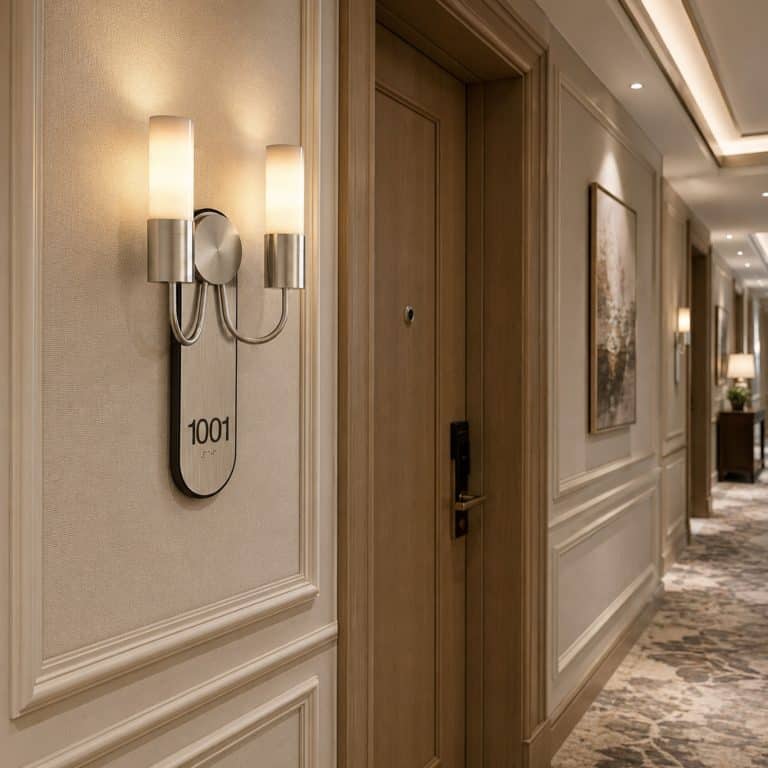
Two lamps can look identical in a showroom and perform very differently after a year in a guest room. One…
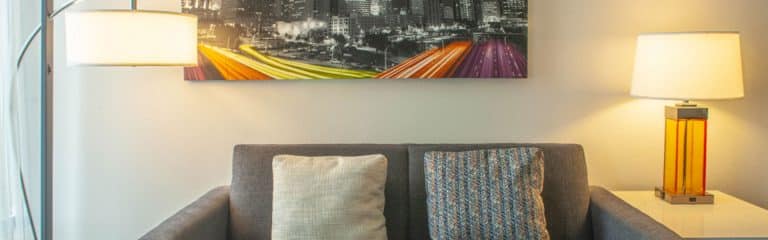
Purchasing agents and designers open most guestroom packages with one question: can one lamp carry USB-C charging and a grounded…
A qualified manufacturer can build a light fixture from your sketch or rendering. Custom light fixture fabrication is how a…
Choosing a hospitality lighting manufacturer is one of the first sourcing decisions on a hotel project. The choice shapes your…