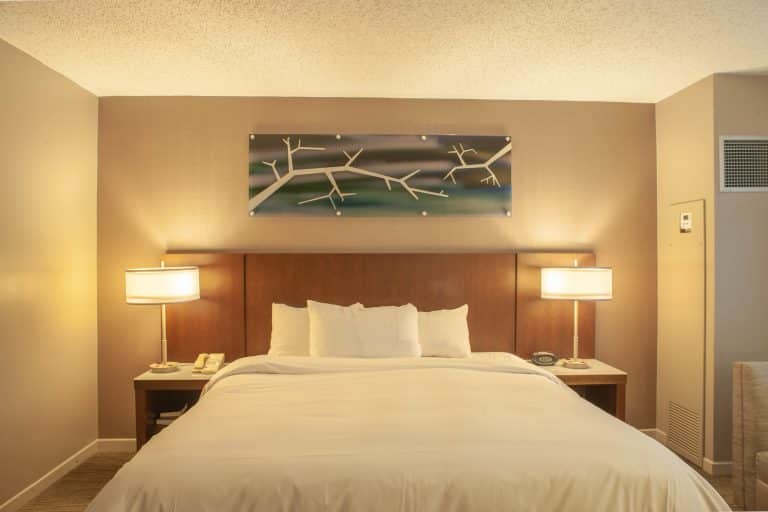
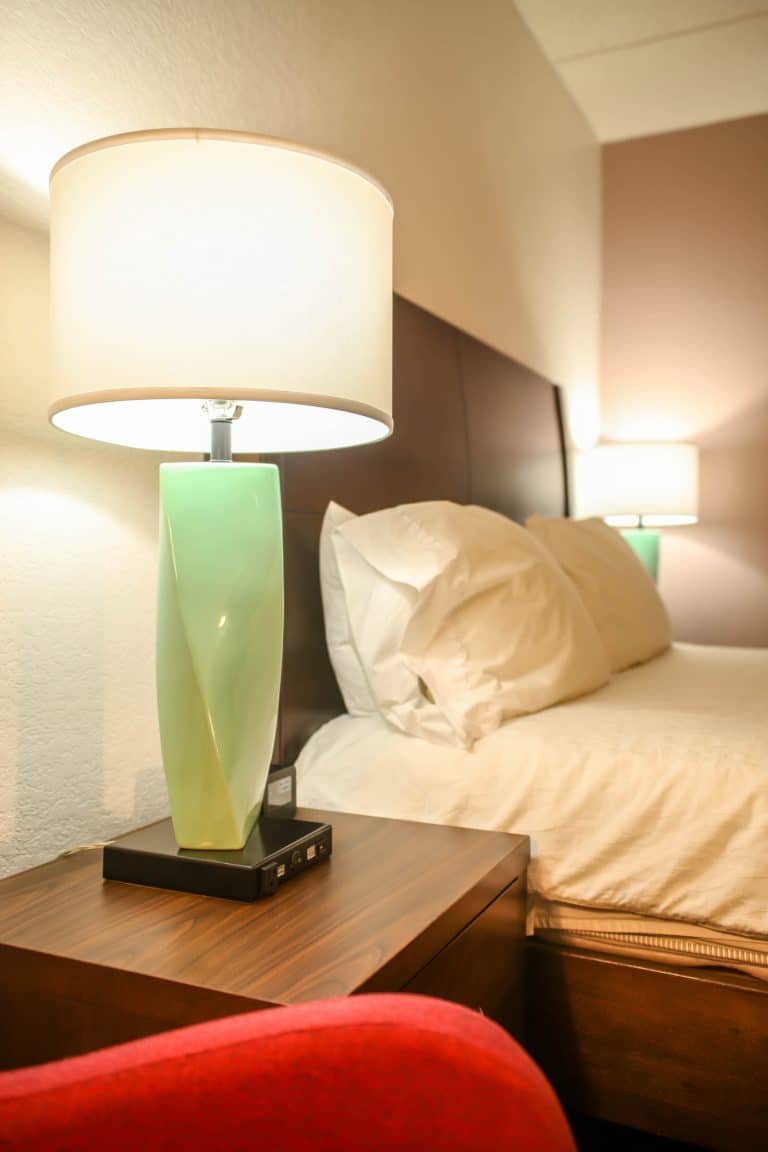
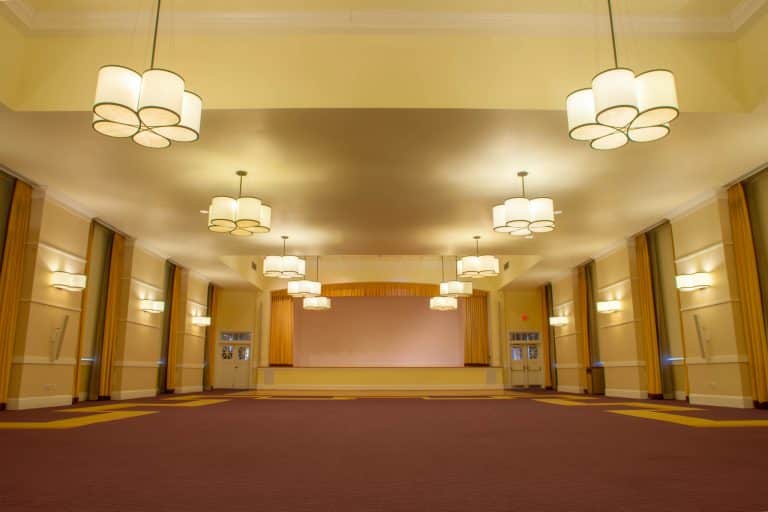
A contract lighting manufacturer produces lighting built to project specifications for commercial properties rather than stock fixtures sold at retail. The work covers design development, engineering, fabrication, finishing, and volume production for hotels, healthcare and senior living facilities, schools, and commercial buildings, with every fixture manufactured to a documented specification that repeats across a property or an entire brand program.
Lighting is the item most often value engineered late and most often reordered early. A guest room package that arrives with four finishes on one wall, or a corridor run that cannot be matched two years later, is almost always the result of buying fixtures instead of buying a specification.
That distinction separates a contract manufacturer from a supplier. Contract production starts from the project drawings and the brand standard, not from a catalog page, and it ends with records that make the same fixture reproducible years after installation.
Purchasing agents, designers, project managers, and brand program managers all touch this decision from a different angle, and all are answering one question: who can build this package, at this quality and quantity, and still match it at the next property.
What Does a Contract Lighting Manufacturer Actually Do?
A contract manufacturer takes a fixture from specification through delivery, handling the engineering and production steps that a distributor or reseller does not.
- Design development and engineering. Turning a designer’s intent, sketch, or reference image into a buildable fixture with resolved dimensions, materials, hardware, and electrical requirements.
- Fabrication. Producing components in metal, ceramic, acrylic, and wood, along with shade production and finishing.
- Sampling and approval. Producing a physical control sample and finish reference approved before volume production begins.
- Volume production to a fixed specification. Manufacturing hundreds or thousands of units that match the approved sample rather than approximating it.
- Documentation and record retention. Holding tooling, finish samples, and specification records so a reorder in year three matches the original installation.
- Program support across properties. Producing the same fixture family across multiple renovation cycles.
How Is Contract Lighting Different From Retail Lighting?
Contract lighting is engineered for continuous commercial use, repeat production, and documented consistency. Retail lighting is engineered for a single household and a single purchase.
| Factor | Contract lighting | Retail lighting |
|---|---|---|
| Basis of purchase | Project specification and brand standard | Catalog selection |
| Production run | Hundreds to thousands of matching units | Individual units |
| Construction | Gauge, joinery, and finish rated for continuous commercial use | Rated for household use |
| Finish control | Physical control sample retained for reorders | Color name only |
| Customization | Finish, size, material, shade, hardware, and electrical adjustments within standards | Limited or none |
| Reorder in year three | Produced from retained records and tooling | Discontinued or changed |
| Documentation | Dimensioned drawings, cut sheets, finish references | Product page |
| Accountability | Single manufacturer responsible for the package | Distributed across sellers |
Where Is Contract Lighting Manufactured, and Why Does Location Matter?
Mario Contract Lighting supports production through a 100,000-square-foot facility in Roanoke, Virginia, with in-house metal, ceramic, acrylic, and wood fabrication, shade production, and finishing. The company has manufactured lighting since 1922 and has completed more than 14,000 projects since 2000.
Manufacturing location changes project risk more than it changes price. Domestic fabrication shortens the distance between an approved sample and the production floor, which matters when a finish needs adjustment mid-project or a room type is added after the package is released. It also keeps tooling and finish records in one place, so a corridor reordered years later is produced from the original references rather than reverse engineered from a photograph.
Select long-term partner factories are used where a project calls for it, with the manufacturing path selected against material requirements, schedule considerations, and cost targets. Fixture scale runs from small components around 3-inch shades up to fixtures near 72 inches in diameter, which allows a guest room fixture and a lobby feature to be produced to one finish standard. Lead times and minimum order quantities are project-dependent and established during quoting. Brand relationships include Hilton, Marriott, IHG, Hyatt, Wyndham, and MGM Resorts, with active brand programs for Hyatt House, Hyatt Place, and Garner.
What Materials Hold Up in High-Use Commercial Environments?
Material selection determines how a fixture ages under commercial cleaning cycles, continuous operation, and daily handling. The failure points in a hospitality environment are predictable, and the material decision is where they are addressed.
| Material | Behavior in high-use environments | Strongest applications | Specification point to confirm |
|---|---|---|---|
| Metal | Resists impact, holds tight tolerances across repeat runs | Corridors, lobbies, public areas, bar and dining | Gauge, and finish durability against cleaning chemicals |
| Ceramic | Stable, resistant to surface wear, adds visual weight | Lobby features, reception, restaurant zones | Packaging and handling during shipment |
| Acrylic | Light, impact resistant, diffuses evenly | Guest rooms, bathrooms, tight clearance conditions | Compatibility with the property’s cleaning agents |
| Wood | Warm surface character, coordinates with casegoods | Guest rooms, boutique lobbies, dining | Finish schedule and humidity conditions |
| Shades | Softest diffusion, widest range of profiles | Guest room bedside, desk, and lounge seating | Material, liner, dimensions, and fitter type for reorders |
How Does a Manufacturer Keep Brand Standards Consistent Across Properties?
Consistency across a brand program comes from retained records, not from repeat ordering. A fixture that matches at the fourth property does so because the manufacturer held the tooling, the finish control sample, and the dimensioned specification from the first.
The failure mode is familiar to anyone who has managed a multi-property renovation. A property completed in year one and one completed in year four are specified by different teams under different supply conditions. If the only record is a color name and a catalog number, the second will not match the first, and the difference will be visible in the corridor before it is visible in a report.
Property-level variation is still expected. What holds constant in a well-run program is the finish standard, the shade language, the light quality, and the fixture family. What flexes is dimension and mounting. Keeping those two categories separate, in writing, is the practical definition of brand consistency in a lighting package.
What Should a Buyer Verify Before Awarding a Lighting Package?
Six checks separate a manufacturer that can deliver a program from a supplier that can fill an order. Run them in this sequence.
- Confirm what is manufactured versus sourced. In-house metal, ceramic, acrylic, wood, shade, and finishing capability determines how substitutions are handled mid-project.
- Verify the sampling process. Confirm that a physical control sample and finish reference are approved before volume production, and that the manufacturer retains them.
- Ask how a reorder in year three is produced. The answer should reference retained tooling and finish records, not a new quote and a new approval cycle.
- Review completed work in your segment. Hospitality, healthcare and senior living, institutional, and commercial environments carry different durability and code conditions.
- Establish lead time and quantity conditions against your actual scope. Both are project-dependent and set during quoting. Any number quoted before the specification is defined is a guess.
- Confirm the full scope the manufacturer can carry. Lighting, signage, wayfinding, lighted mirrors, luggage racks, bulbs, and replacement shades under one supplier reduces coordination load.
Practical Questions for Project Teams
Does custom always mean higher cost and longer lead times?
No. Custom does not automatically mean excessive cost increases, long lead-time penalties, or high minimum order quantities. Many customizations are finish changes, size adjustments, material substitutions, shade modifications, or hardware variations applied to an existing fixture design. Cost and schedule depend on which of those a project requires, and both are established during quoting.
What is the difference between a contract lighting manufacturer and a lighting supplier?
A manufacturer designs, engineers, fabricates, and finishes the fixture and retains the records that make it reproducible. A supplier sources and resells fixtures produced by others. The distinction matters most at two moments: when a specification needs to change mid-project, and when a fixture needs to be matched years after installation.
What information does a manufacturer need to quote a project?
Fixture drawings or reference images, quantities by fixture type, finish direction, mounting conditions, ceiling heights where relevant, electrical and dimming requirements, and the project schedule. The more of that is defined at the start, the more accurate the quote and the fewer changes after release.
Can one manufacturer handle lighting and signage on the same project?
Yes. Interior lighting, decorative and functional fixtures, illuminated signage, non-illuminated signage, wayfinding systems, luggage racks, bulbs and accessories, replacement lamp shades, and lighted mirrors can be produced under a single scope. Consolidating them holds finish consistency across elements a guest sees together in a corridor or lobby.
How are replacement parts handled after a project closes?
Replacement shades, lamps, and components are produced against the original specification when that specification was documented at the time of the order. Recording shade material, dimensions, liner, and fitter type at the original purchase is what allows a replacement years later to match rather than approximate.
Where a Manufacturer Fits in a Complete Lighting Plan
Selecting a manufacturer is not the last step in a lighting package. It is the step that determines how many of the earlier decisions survive.
A complete plan sets the finish standard and fixture family first, then assigns types to surfaces: ceiling fixtures for general coverage, pendants where light must land on a defined surface, sconces at headboards and corridors, table and floor lamps where flexibility matters, and signage carrying the same finish at eye level. That plan holds only if one party is responsible for producing all of it to a single documented standard, and for reproducing it at the next property. That responsibility is the actual product a contract manufacturer sells. The fixtures are how it is delivered.
Explore Contract Lighting Manufacturing for Hospitality Lighting Projects
Evaluate specification-ready contract lighting manufacturer capabilities within a broader hospitality lighting and hotel lighting framework. Solutions are developed to support brand consistency, durability, and project-specific requirements across commercial environments.