Interior Commercial Lighting: What to Check When Comparing Hotel and Residential Lamps
Two lamps can look identical in a showroom and perform very differently after a year in a guest room. One…


In hospitality lighting, the word custom is used frequently and often imprecisely. For designers, purchasing agents, and project managers, a lack of clarity can create misaligned expectations around cost, lead time, feasibility, and project risk.
In a contract environment, custom lighting is not an abstract design concept. It is a manufacturing decision with real implications for production methods, materials, schedules, and budgets. Understanding what custom means, and what it does not, helps teams specify lighting that performs as intended without introducing avoidable friction.
This article defines custom hospitality lighting in practical terms, grounded in how contract manufacturers operate and how hospitality projects are executed.
At its core, custom hospitality lighting refers to controlled modification of a proven fixture platform to meet specific project requirements. It is not the same as experimental design or one-off fabrication without precedent.
In most hospitality projects, custom lighting includes one or more of the following.
Finish adjustments
Custom finishes are among the most common and efficient forms of customization. This may include the following.
When addressed early in the specification process, finish changes are typically low risk and highly repeatable.
Dimensional modifications
Adjusting height, width, depth, or overall scale helps fixtures fit architectural conditions without redesigning the product from scratch. Examples include the following.
These changes are usually executed within established tooling and fabrication methods.
Material substitutions
Material changes are often driven by durability, cost control, or brand alignment. Common substitutions include the following.
Material customization must balance aesthetic goals with performance in high-traffic hospitality environments.
Shade and diffuser modifications
Shades are frequently customized to support the following.
Because shades are often produced in-house or through established partners, this form of customization is scalable and predictable.
Just as important as understanding what custom includes is understanding what it does not imply by default.
Unlimited design freedom
Custom hospitality lighting does not mean every idea is feasible without tradeoffs. Manufacturing realities still apply, including structural limitations, electrical standards, and material performance constraints.
Experienced manufacturers guide customization within parameters that protect safety, reliability, and repeatability.
Excessive cost increases
A common misconception is that any custom request dramatically increases cost. In practice, many standard customizations, such as finishes, size adjustments, and shade changes, have minimal cost impact when specified early.
Significant cost increases typically result from late-stage changes, unique tooling, or deviations that disrupt established production workflows.
Unpredictable lead times
Custom does not automatically mean long or uncertain lead times. In many cases, controlled customization within existing platforms supports more predictable schedules than sourcing entirely new fixtures late in the project.
Lead times become less predictable when customization introduces new engineering, untested materials, or last-minute revisions.
High minimum order quantities by default
Customization alone does not dictate minimum order quantities. MOQs are influenced by production method, material selection, and whether components are domestically produced or imported.
Many custom hospitality lighting programs support low or flexible MOQs, particularly when domestic manufacturing is involved. Exact MOQs remain project dependent and should be confirmed through quoting.
Hospitality projects operate under tight coordination between design intent, procurement, and construction schedules. Misunderstanding what custom entails can create downstream issues such as budget misalignment during value engineering, late-stage redesigns to meet lead times, or inconsistent fixtures across rooms or properties.
Clear definitions allow teams to make informed decisions early, when customization is most efficient and least disruptive.
For designers, this clarity supports creative intent without introducing unnecessary risk. For purchasing agents, it enables accurate budgeting and vendor comparison. For project managers, it improves schedule confidence.
The most successful hospitality lighting projects address customization early in specification, not after pricing or submittals.
Early conversations should focus on the following.
This approach transforms custom lighting from a perceived risk into a controlled, repeatable solution.
In contract hospitality lighting, custom is not about novelty. It is about fit, consistency, and execution.
When defined correctly, customization supports brand identity, operational durability, and project efficiency without unnecessary complexity. Understanding what custom means, and what it does not, allows hospitality teams to specify lighting with confidence, align expectations across stakeholders, and avoid the pitfalls created by vague assumptions.
If you are evaluating custom hospitality lighting for a guest room or public area program, start a specification conversation early so customization can be engineered into the schedule and budget, not forced in later.
Recent News & Updates
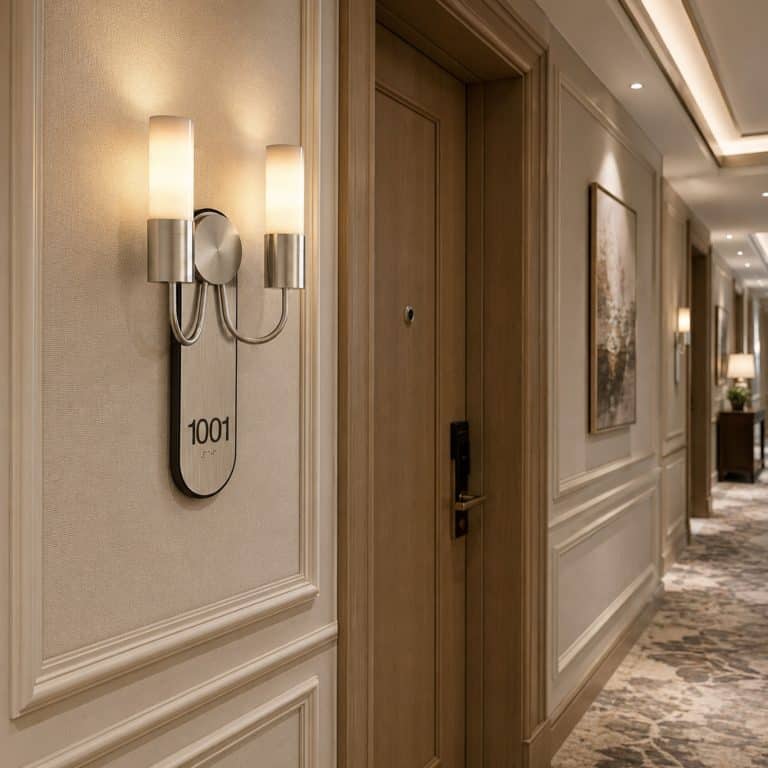
Two lamps can look identical in a showroom and perform very differently after a year in a guest room. One…
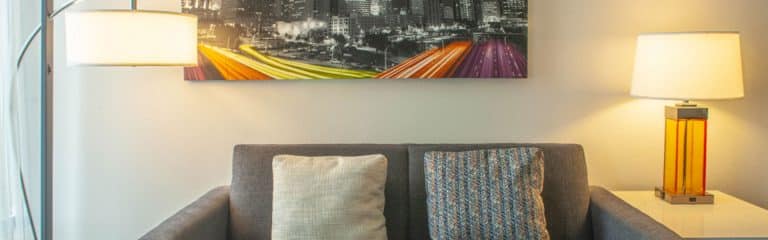
Purchasing agents and designers open most guestroom packages with one question: can one lamp carry USB-C charging and a grounded…
A qualified manufacturer can build a light fixture from your sketch or rendering. Custom light fixture fabrication is how a…
Choosing a hospitality lighting manufacturer is one of the first sourcing decisions on a hotel project. The choice shapes your…