Interior Commercial Lighting: What to Check When Comparing Hotel and Residential Lamps
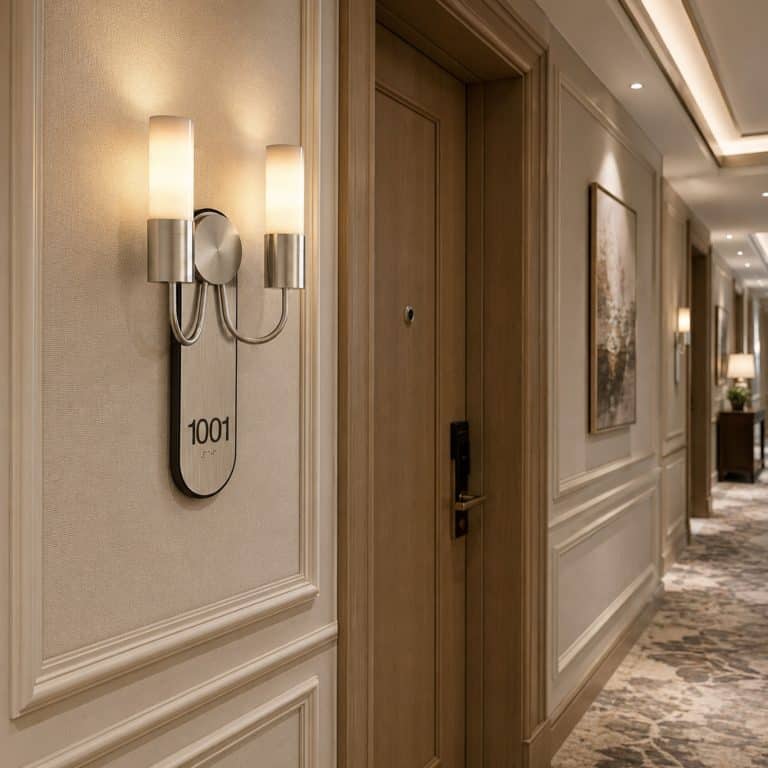
Two lamps can look identical in a showroom and perform very differently after a year in a guest room. One…


Hotel lobbies serve multiple functions at once. They operate as arrival zones, meeting points, informal work areas, and social spaces. Lighting must support these overlapping uses while maintaining visual consistency with the property’s brand standards
Successful lobby lighting relies on a layered approach that combines ambient illumination, decorative statement fixtures, and targeted task lighting. When properly specified, each lighting layer works together to support circulation, seating areas, and architectural scale.
Ambient lighting provides the base level of illumination across the lobby. This layer supports general navigation, safety, and visual clarity throughout the space.
Common ambient solutions include:
In large public areas, ambient lighting should be distributed evenly across the space rather than concentrated in a single focal point. This reduces harsh shadows and creates comfortable visibility throughout seating zones, circulation paths, and reception areas.
When specifying ambient fixtures, designers often consider ceiling height, lobby size, and desired brightness levels to ensure the lighting remains balanced across the entire public area.
While ambient lighting establishes function, decorative fixtures define the visual language of the lobby.
Statement lighting elements often include:
These fixtures typically anchor key architectural zones such as:
Decorative lighting should complement the property’s interior design while maintaining durability appropriate for high-traffic environments.
Because hospitality lobbies experience constant guest movement, decorative fixtures must be designed for long-term performance, serviceability, and stable mounting within large open spaces.
Lobby seating areas often serve as informal workspaces for guests. Lighting in these zones must support reading, laptop use, and small-group conversation.
This is where lobby floor lamps become particularly valuable.
Well-positioned floor lamps help:
Floor lamps are frequently specified alongside table lamps or wall lighting to provide comfortable illumination without increasing overall ambient brightness across the lobby.
Because these fixtures are placed directly within guest circulation areas, they must be designed for stability, durability, and consistent performance in public environments.
Lobby spaces often feature high ceilings, large atriums, or open multi-level designs. Lighting fixtures must be scaled appropriately to maintain visual proportion within these volumes.
Designers typically evaluate:
Large-scale hotel chandeliers and pendant fixtures are frequently used to visually anchor tall spaces, while floor lighting helps bring illumination closer to guest level.
Balancing fixture scale across vertical layers prevents lighting from appearing either undersized or visually overwhelming.
Unlike guest rooms, lobby fixtures operate continuously and experience significant daily traffic. Lighting specified for these areas must support long-term use with minimal maintenance.
Common durability considerations include:
Contract lighting manufacturers often produce fixtures with structural components designed for hospitality use, ensuring consistent performance across multiple properties and renovation cycles.
Lobby lighting works best when each layer is considered as part of a complete system. Ambient illumination, decorative focal points, and task lighting should complement one another rather than compete visually.
This coordinated approach allows designers to create public spaces that feel welcoming, functional, and aligned with the property’s overall brand experience.
When executed correctly, lighting supports both operational needs and the visual character of the hospitality environment.
Evaluate specification-ready Lobby Floor Lamps within a broader hospitality lighting and hotel lighting framework. Solutions are developed to support brand consistency, durability, and project-specific requirements across commercial environments.
Recent News & Updates
Two lamps can look identical in a showroom and perform very differently after a year in a guest room. One…
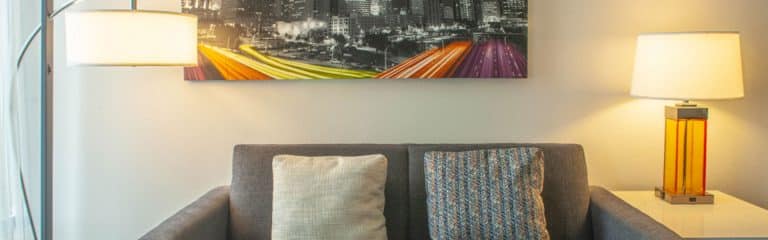
Purchasing agents and designers open most guestroom packages with one question: can one lamp carry USB-C charging and a grounded…
A qualified manufacturer can build a light fixture from your sketch or rendering. Custom light fixture fabrication is how a…
Choosing a hospitality lighting manufacturer is one of the first sourcing decisions on a hotel project. The choice shapes your…