Light bulb base sizes describe the part of a bulb that connects to a socket, and each size has its own code and diameter. This guide explains what those codes mean and shows how to standardize base types across a hotel property.
It’s written for the designers, purchasing agents, and contractors who specify and relamp fixtures across many rooms at once. You’ll learn how the letter-number system works, how to audit the bases already in use across a property, and why settling on a small, consistent set of them simplifies every relamp that follows.
What Is a Light Bulb Base?
A light bulb base is the part of the bulb that screws or plugs into a socket and carries the electrical connection. It holds the bulb in place and completes the circuit that powers the light.
Matching the base to the fixture matters for both fit and safety. A base that is too large will not seat in the socket, and a mismatched connection can fail or overheat.
Bulb bases fall into a few main families: screw, pin, bayonet, and plug-in. Across the guest-room lamps we build, screw bases are the type you meet most often, so this guide starts there.
From a manufacturer’s view, the socket a fixture is built around decides which bulbs fit. That decision compounds at property scale: the base chosen for one lamp determines the relamping plan for every matching fixture across a 200-room property.
Why Standardize Bulb Bases Across a Property
A single hotel can run several fixture types across guest rooms, corridors, lobbies, and baths — and each fixture type can technically use a different base. Left unmanaged, that adds up to a property stocking a dozen or more bulb variants for what could be three or four.
Standardizing base sizes by fixture category — one base for table lamps, one for sconces, one for corridor fixtures — keeps replacement bulbs interchangeable across every room that shares that fixture type.
- Key point: Fewer base types means fewer SKUs housekeeping and maintenance have to keep on hand, which cuts storage space and the chance of grabbing the wrong bulb mid-turn.
- Key point: Vendors quote better pricing on higher volumes of fewer SKUs than on small orders spread across many different bases.
- Key point: Relamping training is faster when staff only need to recognize a handful of base codes instead of a dozen.
- Key point: A documented base standard makes it easier to keep multiple properties in a portfolio consistent, especially under a shared brand program.
How Light Bulb Base Sizes Are Named
Bulb bases use a short letter-number code. The letter names the base type, and the number gives a measurement in millimeters.
Screw sizes follow the Edison screw base standard: E means Edison, and the number is the base diameter in millimeters across the thread peaks. So an E12 base has a diameter of 12 mm, and an E26 base measures 26 mm across.
Pin bases use the letter G, and the number gives the space between the pins in millimeters. A G4 base, for example, has pins set 4 mm apart. Reading the code first tells you both the family and the size before you order.
Screw Base Sizes: From Candelabra to Mogul
Edison screw bases cover most bulbs sold in the United States. They range in size from small decorative bases to large industrial ones, and each size has a common name.
The table below lists the main screw sizes with their diameters and typical uses. The number in each code is the width in millimeters, so the sizes climb in a clear order.
| Base Code | Diameter | Common Name | Typical Application |
|---|---|---|---|
| E11 | 11 mm | Mini-candelabra | Small halogen and accent bulbs |
| E12 | 12 mm | Candelabra | Decorative sconces and chandeliers |
| E17 | 17 mm | Intermediate | Appliance and specialty fixtures |
| E26 | 26 mm | Medium (US standard) | Table lamps and floor lamps |
| E27 | 27 mm | Medium (Europe) | European 230–240 V fixtures |
| E39 | 39 mm | Mogul | High-wattage and industrial fixtures |
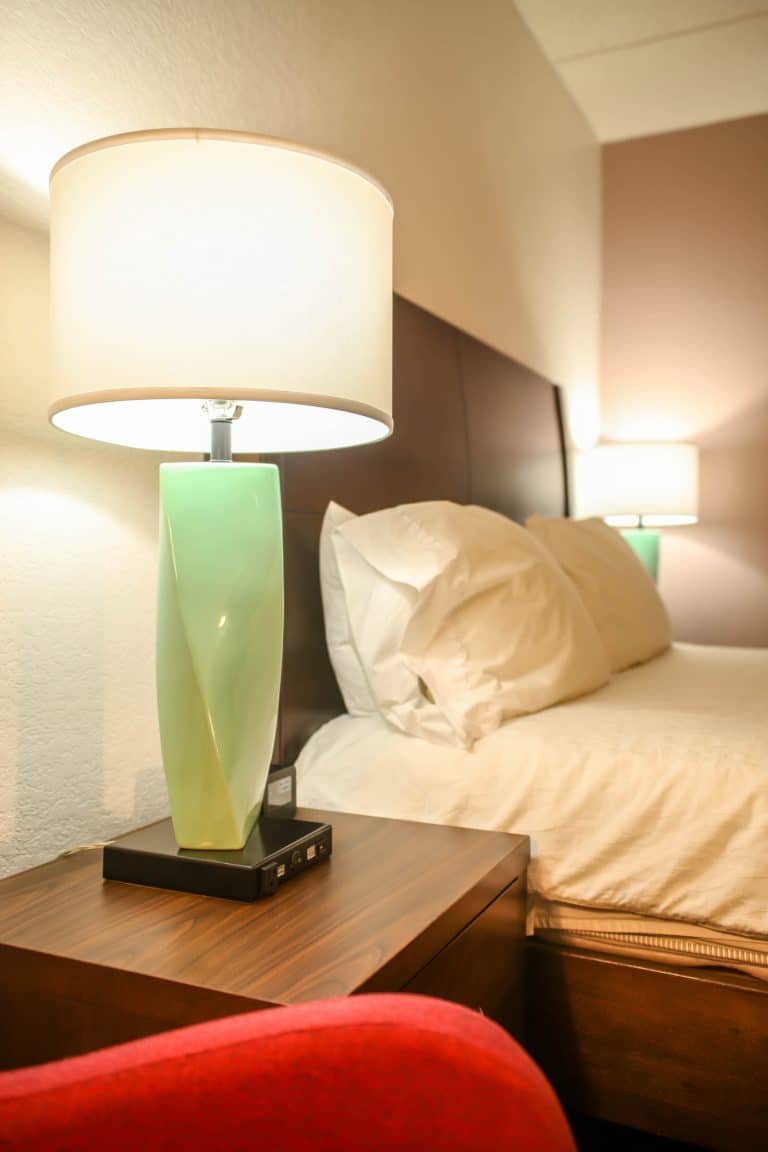
The E26 medium base is the standard for most North American lamps. You will find it on our hotel table lamps and reading fixtures used in guest rooms across a property — specifying it consistently keeps one bulb type in housekeeping’s cart instead of five.
The E12 candelabra base is the small screw base built for decorative fixtures. Many hospitality wall sconces and chandeliers rely on E12 sockets for a smaller, cleaner lamp profile.
Is E12 the Smallest Base? Candelabra and Below
The E12 candelabra base is the smallest screw base you’ll typically specify on a property, most often in decorative sconces and chandeliers. Smaller screw bases exist, but they show up far less often outside specialty fixtures.
An E11 mini-candelabra base measures 11 mm, and the tiny E10 base is smaller still. Both appear in specialty and low-voltage bulbs rather than everyday guest-room lighting.
Their small size keeps the socket hidden behind the shade or the bulb, which is part of why candelabra bases show up most in a property’s decorative fixtures rather than its functional ones.
E26 vs. E27: What Is the Difference?
Per this E26 and E27 base guide, E26 lamps are designed for the North American 120 V market and E27 lamps are designed for 240 V markets. E26 is the standard base across North America, and E27 is the standard across Europe and elsewhere. Their names give the nominal diameter: 26 mm for E26 and 27 mm for E27.
Despite a common claim of a 1 mm diameter gap, bases made to IEC standards have nominal diameters that are very close and overlap. The real difference is the voltage rating. Insulator height and screw length also vary between the two.
The two will often thread into each other’s sockets. Still, they are not electrically interchangeable, because a bulb must match the fixture’s voltage. Verify voltage before mixing them across a portfolio, especially with imported fixtures or properties outside North America.
Are E26 and A19 the Same? Base vs. Bulb Shape
E26 and A19 describe two different things, and this is the most common point of confusion. E26 names the base, while A19 names the bulb’s shape and size.
In the A19 code, A marks the standard pear shape most people picture. This A-series light bulb overview notes the number is the diameter in eighths of an inch. So A19 is about 19 eighths, or roughly 2.4 inches, across the widest point.
A standard US bulb is an A19 shape sitting on an E26 base. When you specify fixtures, check both codes so the bulb fits the socket and clears the fixture housing — especially when standardizing a base across multiple room types.
Pin, Bayonet, and Plug-In Base Sizes
Not every base screws in. Several non-screw families appear in commercial and hospitality fixtures, from recessed downlights to fluorescent tubes.
Pin bases use two metal pins that push or twist into a socket. A G4 base has pins 4 mm apart, while a GU10 base uses a 10 mm twist-lock common on MR16 halogen and LED spotlights.
The bi-pin base specifications list the G13 base at 12.7 mm (0.50 in) pin spacing, common on T8, T10, and T12 fluorescent tubes. These tubes still light many back-of-house and corridor fixtures.
Bayonet bases have smooth sides with two small side pins that lock into grooves. You push and twist to seat them, which suits fixtures that face vibration or frequent handling.
Plug-in bases use flat prongs instead of threads and carry PL codes. They are typical of compact fluorescent lamps in recessed cans and hospitality ceiling fixtures.
How to Identify the Base Sizes Already in Use Across Your Property
You can identify a base in under a minute with a quick look and one measurement. Start by checking how the old bulb connects, then confirm the printed code.
For a multi-room audit, log the base code by fixture type — guest room table lamp, corridor sconce, lobby pendant — so you can see how many different bases are currently in use before consolidating to one standard per category.
- Look at the connection type, since threads, straight pins, side pins, and flat prongs each signal a different base.
- Match threads to a screw base and flat prongs to a plug-in base.
- Match straight pins to a pin base and smooth walls with side pins to a bayonet base.
- Read the base code printed on the bulb or fixture label, then measure the width in millimeters if none appears.
Property teams should also check the fixture cut sheet before placing an order. Our lighting spec catalogs list fixture details so base and socket specs line up before a relamp.
Base Materials and Efficiency Considerations
The metal in a base affects how long it lasts, especially under commercial cleaning cycles. Base materials range in cost and rust resistance, so the choice ties directly to serviceability.
Iron bases are the cheapest and the most prone to rust. Nickel-plated copper and nickel-plated aluminum cost more and resist rust well over years of use.
Base durability works alongside the fixture finish, which takes the daily wear in a guest room. Our fixture finish options cover plated and powder-coat choices built for contract use.
Base choice also connects to efficiency rules for standard screw-base bulbs. Under the federal lamp efficiency rule, beginning July 25, 2022, any general service lamp below 45 lumens per watt cannot be sold.
Since 1922, Mario Contract Lighting has specified sockets and base materials for hospitality projects, weighing rust resistance against budget on every order.
Choosing the Right Base for Your Fixture
Choosing the right base comes down to matching the socket and confirming a few specs. The steps stay the same whether you’re relamping one fixture or standardizing an entire property.
- Read the base code on the fixture label or the socket itself.
- Order bulbs with the same base code, such as E26 or E12.
- Confirm the bulb’s voltage and wattage match the fixture and circuit.
- Check that the bulb clears the housing or the shade.
- Standardize the same base code across a fixture category — table lamps, floor lamps, sconces — so one relamp order covers every room instead of several.
For guest-room fixtures like hotel floor lamps, a shared base across rooms simplifies every future relamp. Standard sockets keep purchasing simple and cut the number of bulb types a property has to stock.
For large or multi-property rollouts, custom specification lets you set one base standard across every room. Send a custom lighting request to match sockets and finishes across your portfolio.
Frequently Asked Questions
How Do I Know What Base Size My Fixture Uses?
Check the bulb or fixture label for a printed code like E26. If none is printed, measure the base diameter in millimeters and match it to a size chart.
Are E26 and A19 the Same Base?
No. E26 is the base that screws into the socket, while A19 is the bulb’s shape. A standard US bulb is an A19 shape on an E26 base.
Is E12 the Smallest Base?
E12 candelabra is the smallest screw base most properties specify for decorative fixtures. Smaller ones like the E11 mini-candelabra (11 mm) and the E10 exist for specialty bulbs.
How Many Base Sizes Are There?
There are many, but a handful cover most needs. Common ones are the E12, E17, E26, and E39 screw bases, plus pin and plug-in types for commercial fixtures.
What Do the Letters and Numbers Mean?
The letter names the base type, such as E for Edison screw or G for pin. The number gives the diameter or pin spacing in millimeters.
What Is a Candelabra Base?
A candelabra base is the E12 screw base, a 12 mm base used in decorative sconces and chandeliers.
Why Should a Property Standardize Its Bulb Bases?
Settling on one base per fixture category lets housekeeping and maintenance stock a single bulb type per category, which speeds up relamping and cuts ordering errors across many rooms.
Conclusion
A light bulb base size is a millimeter measurement named by a letter-number code. Once your team can read that code, matching a bulb to a socket — and standardizing that match across every room — becomes simple.
Across most hospitality properties, the E26 medium base and the E12 candelabra base cover the majority of fixtures, from guest-room lamps to decorative sconces. Settling on one base per fixture category, rather than mixing several, is what keeps relamping fast and purchasing predictable across a multi-room property.
Mario Contract Lighting has built and customized fixtures, finishes, and sockets for hospitality properties since 1922, from our 100,000-square-foot Roanoke, VA facility, and is an approved vendor for Hilton, Marriott, IHG, Hyatt, Wyndham, and MGM Resorts. We help property teams set a base standard that holds up through years of service.
Explore our Custom Capabilities or schedule a consultation today.