Interior Commercial Lighting: What to Check When Comparing Hotel and Residential Lamps
Two lamps can look identical in a showroom and perform very differently after a year in a guest room. One…


Hotel lighting is the lighting specified for the spaces inside a hotel property (lobby, guest rooms, corridors, bathrooms, and exterior areas), built to hold up to daily commercial use while shaping how a guest experiences each space. It’s a space-by-space specification problem more than a single design choice, since a lobby chandelier, a guest room reading lamp, and a corridor fixture each answer a different functional need.
That’s the difference between hotel lighting and lighting in general: every fixture has to earn its place in a specific room, under a specific duty cycle, and often under code-required controls. This guide walks through hotel lighting by function, by space, and by the requirements that shape fixture decisions on hotel projects: energy code controls and brand standards.
Every hotel lighting plan combines four functional categories, and knowing which one a fixture is serving makes the space-by-space breakdown below easier to follow.
Key point: Most hotel spaces layer two or three of these types together rather than relying on one. A guest room typically needs ambient light for general use, task light at the desk and nightstand, and accent light if the room has a design feature worth highlighting.
A hotel property doesn’t specify lighting once. It specifies it separately for each space, because each one has a different function, duty cycle, and guest expectation.
The lobby sets the first impression, and it typically runs on layered lighting: a decorative ceiling fixture as the visual anchor, ambient light to fill the room, and accent lighting on seating areas or architectural features. Shade pendant lighting is a common choice here, since it works as both ambient fill light and a design statement without the cost or scale commitment of a full chandelier.
Color temperature in the lobby is a project decision, not a fixed rule. The brand standard, the design concept, the amount of daylight, the finishes, and how the lobby connects to adjacent bars and restaurants all shape the right choice. Once it’s set, holding it consistent across every fixture in the space matters as much as the number itself.
Guest room lighting has to support several activities in one space: reading, working, dressing, and unwinding. That means table lamps, floor lamps, and wall sconces near the headboard or nightstand, usually on separate switches or a dimmer so a guest can light only the part of the room they’re using. Because portable lamps often plug into switched receptacles, they’re also part of the room’s automatic control plan, which the control section below covers.
Corridor lighting often runs for long hours, in many properties around the clock, which makes fixture durability the first specification question, not the last. Whether a fixture suits continuous corridor use depends on its construction, light source, driver, listing, and serviceability, not on its shape. Cage pendant lighting can work in corridors and public spaces when it’s built for that duty cycle, but the open cage form doesn’t make a fixture suitable on its own.
Bathroom lighting is almost entirely task lighting: a guest needs enough light at the mirror to see clearly, without glare or harsh shadows. Vanity wall sconces placed at eye level solve the shadow problem that overhead-only lighting creates, and lighted mirrors build that same even illumination directly into the mirror itself.
Exterior hotel lighting has to handle a specification problem interior lighting never faces: weather. Entry, porte-cochère, and facade fixtures are built and tested differently from anything installed indoors, and custom outdoor lighting built for the elements covers the material and testing standards that separate a fixture rated for that exposure from one that isn’t.
Guest room lighting isn’t just a design decision; energy code governs how it’s controlled. Under ASHRAE/IES Standard 90.1-2022, all lighting and switched receptacles in hotel guest rooms and suites must turn off automatically within 20 minutes of the room becoming unoccupied. The 2022 edition also removed the previous exception for key card controls, so a keycard switch alone no longer meets the requirement.
Guest bathrooms carry their own rule. According to Leviton’s ASHRAE 90.1-2022 design guide, bathrooms need a separate control that turns the bathroom lighting off automatically within 30 minutes after occupants leave, with up to 5 W of night lighting exempt.
Which edition of 90.1 (or the IECC) applies depends on what the project’s jurisdiction has adopted, including local amendments. Confirm the applicable code with the project’s engineer and the authority having jurisdiction before locking in a control strategy.
Key point: This requirement shapes fixture selection as much as it shapes the control system. A fixture specified for a guest room needs to work with the automatic control the property uses, typically occupancy-based sensing tied into the room’s controls, and plug-in lamps on switched receptacles need to behave predictably when that control cuts and restores power.
Hotels replace lighting for several reasons: fixtures reaching the end of their service life, energy retrofits, a design refresh or repositioning, and brand-mandated renovation. One common driver of that last category is a Property Improvement Plan, or PIP: a brand-mandated set of renovation requirements a hotel owner has to complete, typically triggered at franchise renewal, a change of ownership, or when a property joins a brand for the first time. Lighting, finishes, and ADA and life-safety compliance are common line items in a PIP scope.
A PIP comes with a deadline set by the franchisor, which can make timeline a deciding factor in how the property sources its lighting. Brand-approved lighting programs help in that situation. These pre-approved fixture schemes for specific hotel brands give a project a vetted starting point. They can simplify fixture selection, but they don’t automatically remove project approvals: brand design review, owner sign-off, and local code requirements still apply to each property.
The clearest shift in current hotel lighting is away from a single, uniform light level per room and toward layered, scene-based lighting, with ambient, task, and accent sources working together instead of one fixture doing everything. Hospitality Interiors’ coverage of hotel lighting design documents this shift as a move toward lighting that actively shapes mood and guest experience, not just illuminates a room.
Tunable and warm-dim LED fixtures follow the same logic, with the same guest room fixture supporting a brighter morning setting and a warmer evening one, rather than a single fixed output all day. They’re a useful option where the project budget and control system support them, not a standard feature of every hotel.
What are the four types of lighting used in hotels? Ambient (general illumination), task (focused light for an activity), accent (highlighting a feature), and decorative (fixtures that are part of the design itself). Most hotel rooms combine two or three of these at once.
What type of lighting control do hotel guest rooms need? Under ASHRAE/IES 90.1-2022, guest room lighting and switched receptacles must turn off automatically within 20 minutes of the room becoming unoccupied, and a keycard switch alone no longer meets that requirement. The locally adopted code determines what applies to each project.
What triggers a hotel to replace its lighting? Common triggers include fixtures reaching end of life, energy retrofits, a design refresh or repositioning, and brand-mandated renovation such as a Property Improvement Plan (PIP) tied to franchise renewal, a change of ownership, or a property joining a brand.
What color temperature is best for hotel lighting? It depends on the project. Warmer tones are common in guest rooms and evening social spaces, but the right color temperature for a lobby or other public area depends on the brand standard, design concept, daylight, and finishes.
What are hotel lighting trends for 2026? Layered, scene-based lighting and tunable or warm-dim LED fixtures, which adjust through the day rather than running at one fixed output, are the clearest trends shaping current hotel projects, though they aren’t standard in every property.
Hotel lighting comes down to matching the fixture to the space (lobby, guest room, corridor, bathroom, or exterior) and to the requirements that shape each project: code-required controls, brand standards, and the project’s schedule.
Mario Contract Lighting has specified lighting across all five of those spaces since entering the hospitality sector in 2013, building on manufacturing experience that goes back to 1922. The company is an approved vendor for Hilton, Marriott, IHG, Hyatt, Wyndham, and MGM Resorts, with completed hotel projects visible in its hotel lighting portfolio. Whether it’s a renovation on a fixed deadline or a new build on its own schedule, request a quote to start the conversation.
Recent News & Updates
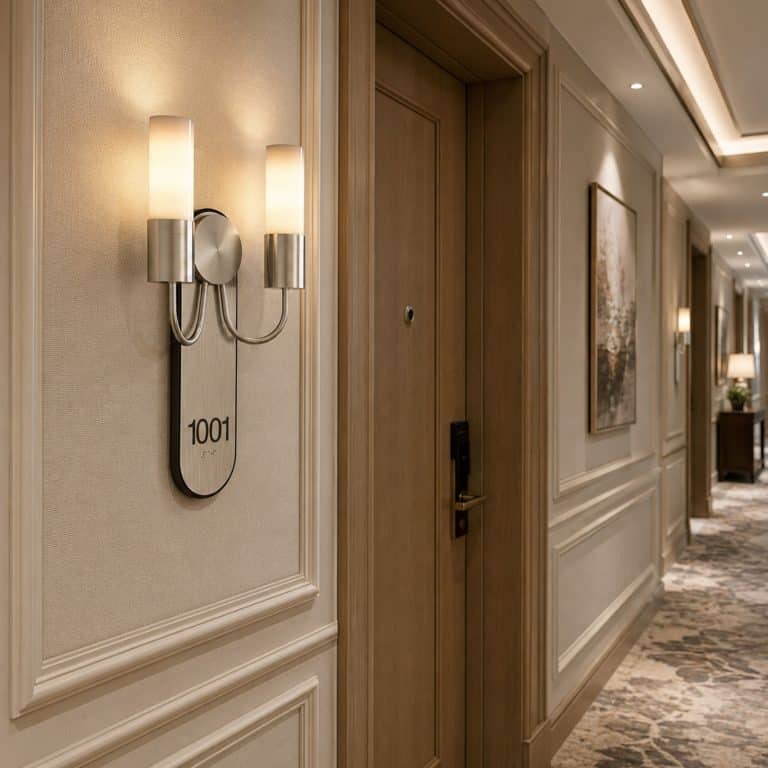
Two lamps can look identical in a showroom and perform very differently after a year in a guest room. One…
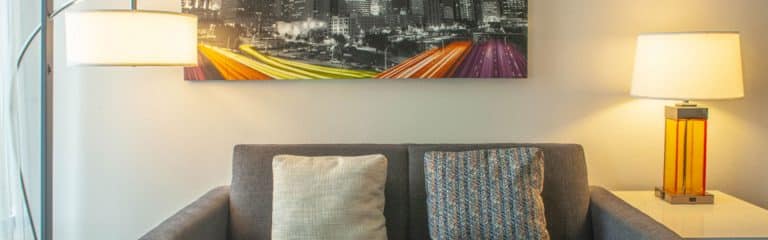
Purchasing agents and designers open most guestroom packages with one question: can one lamp carry USB-C charging and a grounded…
A qualified manufacturer can build a light fixture from your sketch or rendering. Custom light fixture fabrication is how a…
Choosing a hospitality lighting manufacturer is one of the first sourcing decisions on a hotel project. The choice shapes your…