Guest-room lighting is one of the most directly experienced elements of a hotel stay. While ceiling fixtures establish general illumination, it is lamps that guests interact with most frequently. Table lamps, desk lamps, bedside lamps, and floor lamps all play a functional role in how a room performs day to night.
For hospitality designers and purchasing teams, specifying guest-room lamps requires balancing comfort, usability, durability, and brand consistency—often across dozens or hundreds of rooms.
Why Lamps Matter in Hotel Guest Rooms
Unlike public areas, guest rooms must support a wide range of activities within a relatively small footprint. Guests may be sleeping, reading, working, watching television, or preparing for the day, often within the same space. Lamps allow for localized light control, giving guests flexibility without relying entirely on overhead fixtures.
Well-specified lamps improve usability, reduce glare, and contribute to a sense of comfort, while poorly considered lamp placement or controls can lead to frustration and negative guest feedback.
Common Lamp Types Used in Guest Rooms
Table Lamps
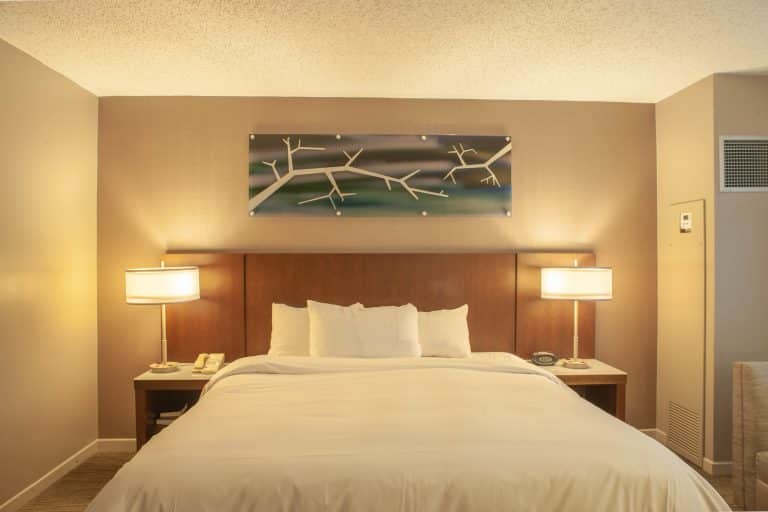
Hotel table lamps are most commonly used on nightstands, dressers, or credenzas. They provide ambient light and visual balance while contributing to the overall design language of the room. Scale is critical—lamps must be proportionate to the furniture and ceiling height to avoid either under-lighting or visual clutter.
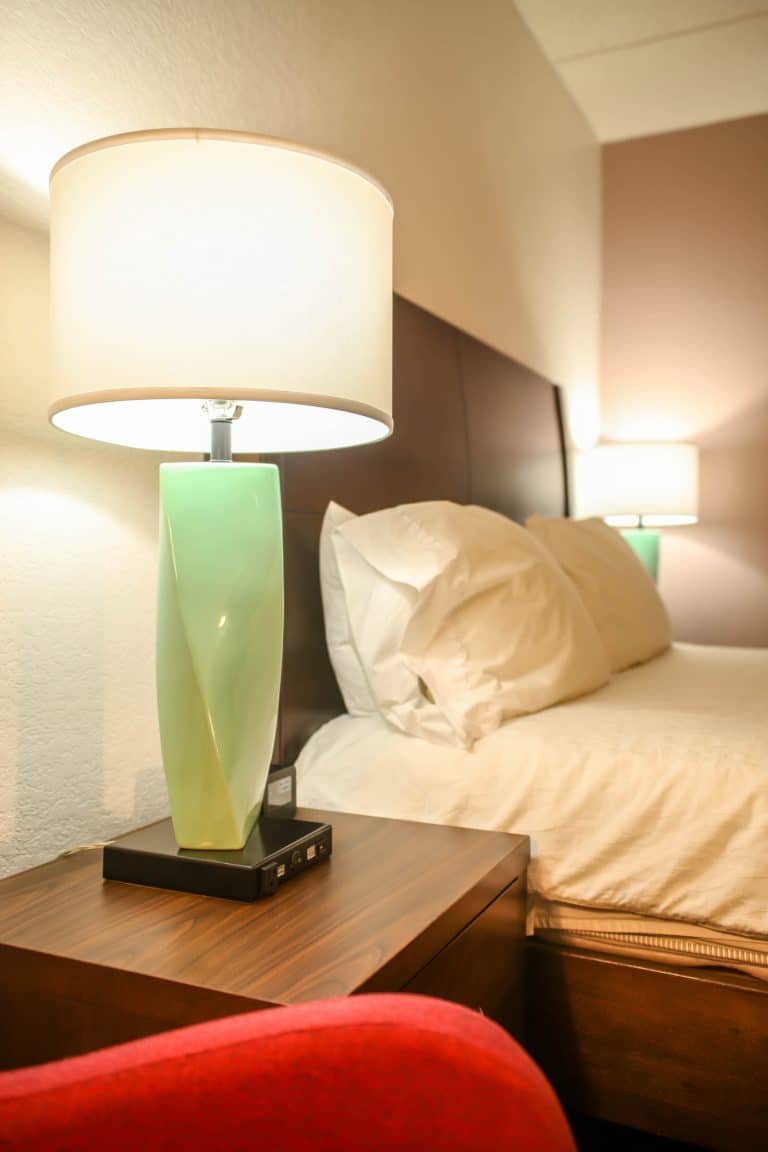
Shade material and shape affect light distribution and glare control, while base construction must be stable and durable for frequent handling.
Desk Lamps
Desk lamps for hotels provide focused task lighting for work surfaces. These fixtures are often specified with directional heads or controlled output to support reading and computer use. Durability is a key concern, as desk lamps are frequently adjusted and repositioned by guests.
Stable bases, intuitive switching, and long-term performance are typically prioritized over decorative features in this category.
Nightstand and Bedside Lamps
Night-stand lamps are among the most frequently used fixtures in a guest room. Guests expect to be able to control lighting easily from the bed, making switch placement and dimming capability especially important.
In some layouts, bedside lamps are used in combination with wall-mounted reading lights or sconces to provide layered control. Shade height, light output, and glare management all contribute to nighttime comfort.
Floor Lamps
Guestroom floor lamps are often placed near seating areas where overhead lighting may not provide sufficient coverage. They supplement ambient light and help define secondary zones within the room. As with table lamps, stability and footprint are important considerations in high-traffic environments.
Functional Details That Impact Guest Experience
Beyond lamp type, several functional details significantly influence how guest-room lighting performs.
Dimming capability allows guests to adjust light levels for different activities and times of day. Even when full dimming is not required, multi-level switching can improve usability.
Switch placement should align with natural guest behavior. Lamps that require guests to reach awkwardly or leave the bed to turn lights on or off can detract from the overall experience.
Integrated USB or USB-C charging is increasingly common in guest rooms, particularly at nightstands and desks. When specified, charging components must be durable and compatible with hospitality electrical standards.
ADA considerations may also apply, including reach ranges and ease of operation. These requirements should be reviewed early to avoid rework later in the project.
Shade design plays a role in glare control and light quality. Translucent materials, diffusers, and proper proportions help distribute light evenly without harsh brightness.
Customization and Brand Consistency
Lamps are often used as a branding element within guest rooms. Finish selection, shade fabric, proportions, and hardware details can all be customized to align with a hotel’s interior design standards.
Customization does not necessarily mean fully bespoke designs. Many hospitality projects rely on modified standard forms with adjusted finishes, sizes, or shade materials to achieve consistency across rooms while maintaining budget and schedule control.
Early coordination between designers, purchasing teams, and manufacturers helps ensure lamp customization is realistic, manufacturable, and aligned with project timelines.
Planning Lamps as Part of a Complete Lighting Strategy
Guest-room lamps should not be specified in isolation. They work best when coordinated with ceiling fixtures, wall lighting, and control systems as part of a layered lighting plan.
Addressing lamp placement, switching, and output during the design phase helps avoid conflicts during installation and ensures a more intuitive experience for guests. Thoughtful lamp specification also reduces maintenance issues and supports long-term performance across the property.
If you’re planning a hospitality project, reviewing guest-room lamp requirements early can simplify specification and improve consistency. Discussing lamp options and customization during design development helps ensure the final solution supports both guest comfort and operational needs.
Explore Hotel lamps for Hospitality Lighting Projects
Evaluate specification-ready Hotel lamps within a broader hospitality lighting and hotel lighting framework. Solutions are developed to support brand consistency, durability, and project-specific requirements across commercial environments.
Next Steps:
- Browse Hotel lamps within hospitality lighting
- Evaluate custom hospitality lighting capabilities
- Start a Specification Conversation
- Request a Quote