Interior Commercial Lighting: What to Check When Comparing Hotel and Residential Lamps
Two lamps can look identical in a showroom and perform very differently after a year in a guest room. One…


Designing a guestroom is like composing a symphony. Each element plays a role in the overall harmony, and when one piece feels out of tune, the experience loses its rhythm. Lighting is no exception. Headboard reading lights, bedside lamps, and wall sconces may function independently, but together they create a cohesive lighting package that shapes how guests feel, navigate, and remember their stay. Successful coordination isn’t just about matching finishes—it’s about crafting a seamless experience that supports your brand, enhances comfort, and simplifies operations for staff.
In a thoughtfully designed guestroom, lighting works in layers. Headboard lights provide focused illumination for reading or unwinding without disturbing a companion. Nightstand lamps or integrated fixtures offer ambient light and convenient control. Wall sconces introduce vertical lighting that opens up the room and improves navigation. When these elements are aligned in scale, color, and rhythm, the space feels cohesive and curated—not cobbled together. This balance enhances both functionality and aesthetics, creating a welcoming atmosphere that resonates with care and intention.
Visual harmony begins with proportion. Nightstands should align with the height of the bed frame and offer adequate surface space for personal items without overwhelming the bed. Lighting fixtures must also be scaled appropriately—table lamps should suit the nightstand size without dominating it, and headboard lights should be positioned for easy access.
In rooms that include wall art or signage, maintain a unified vertical composition by hanging artwork roughly 8–10 inches above the nightstand. When furniture, lighting, and décor are in proportion, the room feels naturally balanced and visually comfortable.
Lighting influences more than visibility—it shapes mood and establishes visual rhythm. Matching bedside lamps create symmetry and a calming, formal feel. Wall-mounted sconces, on the other hand, free up tabletop space and introduce sculptural intrigue. Warm lighting pairs well with wood finishes for a cozy ambiance, while cooler light complements sleek surfaces like metal or lacquer.
Symmetry lends itself to classic, orderly spaces, while asymmetry—through mixed lighting styles or off-center art—adds character and energy. Ultimately, the goal is to use layered lighting to make the bed the focal point and support a relaxing, intuitive guest experience.
Lead with the guest experience when selecting fixtures. Integrated headboard lights that sit flush with the surface offer focused illumination with a clean, modern profile. Warm, soft LEDs support relaxation and can gently guide guests toward rest. Wall sconces installed at eye level (about 5½ feet from the floor) deliver a sense of scale and help orient guests in the room. Dimmable nightstand lamps allow guests to personalize their lighting environment.
Each piece should not only fulfill a function but also align with your brand’s aesthetic—through shared finishes, forms, and materials. A coordinated package feels like a family of fixtures, not a set of unrelated parts.
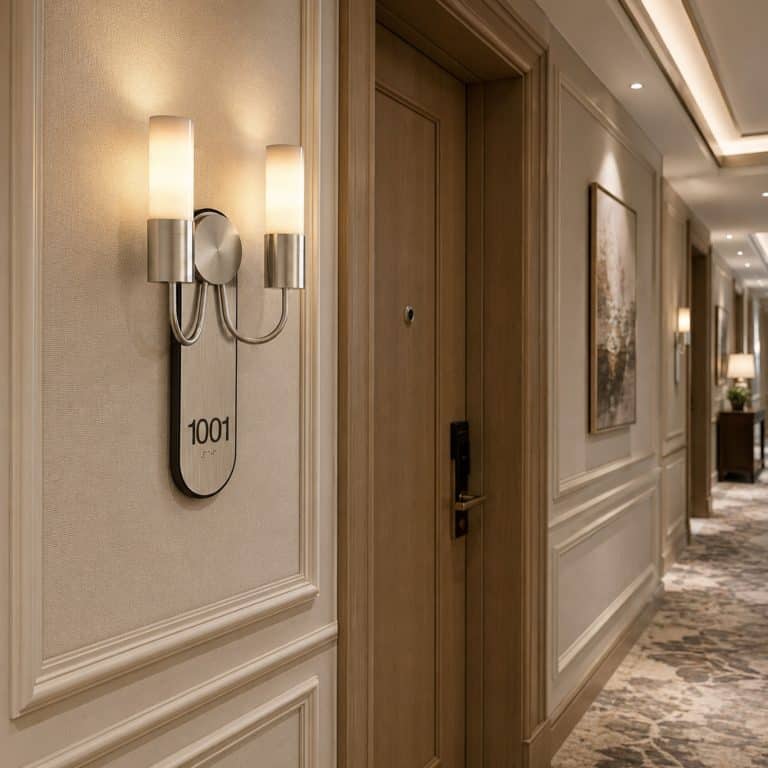
Correct placement is critical. For decorative sconces, mount around 5½ feet above the finished floor to ensure a comfortable visual height and prevent glare. In guestrooms or corridors, sconces used for general lighting should be positioned between 60 and 72 inches from the floor, spaced 5 to 7 feet apart to ensure even coverage and visual flow.
Headboard reading lights should be installed at shoulder height when guests are seated in bed—comfortably within reach. These standards provide a useful starting point but should be adjusted based on fixture size and room dimensions.
Choose LED sources with warm color temperatures (2,700–3,000 K) for restful environments, and neutral whites for task-focused areas. High CRI (Color Rendering Index) ensures that fabrics, furnishings, and artwork appear vibrant and accurate.
Controls matter. Offer dimmable functions and individual switches to let guests set their own lighting mood. Incorporate occupancy sensors or master switches that allow multiple lights to be turned off when the room is unoccupied—improving energy efficiency without sacrificing comfort. Prioritize long-life LEDs to reduce power usage and minimize maintenance.
Cohesive finishes unify the room’s visual story. Warm wood nightstands pair beautifully with fixtures and wall art that share similar tones. Metallic accents like brushed brass or polished chrome can serve as visual bridges between different materials. Coordinating headboard upholstery with lamp shades or sconce backplates subtly reinforces brand colors.
When materials echo each other across lighting, furniture, and décor, the space feels curated, consistent, and thoughtfully designed.
A well-coordinated lighting package transforms an ordinary guestroom into a memorable experience. When headboard lights, nightstand fixtures, and wall sconces are aligned in scale, rhythm, and material, guests feel both comforted and impressed. Layered lighting supports functionality—reading, relaxing, navigating—while reinforcing your brand’s design language.
Smart details like appropriate mounting heights, warm LEDs, and energy-saving controls ensure that the lighting is as practical as it is beautiful.
At Mario Contract Lighting, we specialize in designing and manufacturing lighting packages that unify aesthetics and performance. Our custom capabilities allow us to tailor headboard sconces, nightstand lamps, and wall fixtures to meet your exact design vision and operational needs. Contact us today or explore our Custom Capabilities to create lighting that harmonizes with every element of your guest experience.
Recent News & Updates
Two lamps can look identical in a showroom and perform very differently after a year in a guest room. One…
Purchasing agents and designers open most guestroom packages with one question: can one lamp carry USB-C charging and a grounded…
A qualified manufacturer can build a light fixture from your sketch or rendering. Custom light fixture fabrication is how a…
Choosing a hospitality lighting manufacturer is one of the first sourcing decisions on a hotel project. The choice shapes your…