Interior Commercial Lighting: What to Check When Comparing Hotel and Residential Lamps
Two lamps can look identical in a showroom and perform very differently after a year in a guest room. One…


Choosing a hospitality lighting manufacturer is one of the first sourcing decisions on a hotel project. The choice shapes your install schedule and how the fixtures hold up long after opening day.
This guide is for purchasing agents and project managers who are new to the category. It explains what these manufacturers do and which certifications to require. It also walks through the custom process and ends with a selection checklist.
Mario Industries has manufactured lighting since 1922, and Mario Contract Lighting has served the contract-lighting sector since 2013, so the advice here comes from the factory floor. Where an answer depends on your project, we say so.
A hospitality lighting manufacturer is a company that designs and builds contract-grade light fixtures for hotels and other commercial hospitality spaces. These fixtures are developed for heavy daily use and must meet applicable safety codes and hotel brand standards.
A hotel lighting manufacturer usually supplies guest rooms, corridors, lobbies, restaurants, and ballrooms. Product lines often include table lamps, floor lamps, ceiling fixtures, wall sconces, and illuminated room signs. The field is also called contract lighting, because fixtures are bought through a project contract with set specs and delivery dates.
Mario Contract Lighting is one example. We are part of a fourth-generation family-owned lighting manufacturer with more than 100 years of manufacturing experience. We operate a 100,000-square-foot manufacturing facility in Roanoke, Virginia, and have completed more than 15,000 projects.
Residential lighting is designed for a home, where the same few people use a lamp every day. A hotel lamp is handled by a new guest almost every night and then wiped down by housekeeping.
“Contract-grade” is not one formal certification. It describes lighting developed for commercial applications, where durability, stability, electrical safety, serviceability, finish performance, and consistency across production quantities matter. The table below shows qualities worth evaluating when you compare the two grades. Not every contract fixture includes all of them, so treat them as selection criteria rather than universal requirements.
| Factor | Residential-Grade Fixture | What to Look for in a Contract Fixture |
|---|---|---|
| Construction | Lighter bodies and hardware sized for home use | Stability features such as weighted bases, and hardware that stays tight under repeated handling |
| Finishes | Chosen mainly for appearance | Finishes specified to resist commercial cleaners and humidity |
| Serviceability | Often sealed or hard to repair | Replaceable components and future parts support |
| Certification | Listing varies by product and retailer | Listing appropriate to the fixture, application, and installation location |
| Consistency | Design can change between retail batches | Matched to one approved spec across every room and property |
Guests and housekeeping staff handle guest room lamps every day, so the failure points are predictable. A light base tips when a guest pulls the cord. Loose hardware lets a lamp body spin until the wiring twists.
A soft shade can also dent during a room turn and stay dented. When you review contract-grade table lamps, ask about base stability, hardware, and shade materials for each model, since construction varies by product.
Serviceability matters just as much as strength. When a socket or switch wears out, maintenance staff should be able to replace that part. Scrapping a whole lamp over a worn switch adds cost and leaves a room short a fixture. Ask whether components are replaceable and how long parts will be supported.
Housekeeping teams clean fixtures with commercial chemicals on every room turn. Bathrooms and pool areas add humidity on top of that. A finish that looks right on a sample board can dull or peel under this routine.
Ask the manufacturer how each finish holds up against the cleaners your housekeeping team uses. Also ask how finishes are matched between production batches.
Batch matching is where multi-property orders succeed or fail. A brushed nickel lamp at your third property should match the one installed at your first property months earlier. Review our finish standards and options to compare finishes before you request samples.
Fixtures installed in U.S. hotels generally need a safety listing, but the exact requirement depends on the fixture, the application, the applicable code, and the authority having jurisdiction. Listings come from an NRTL, or Nationally Recognized Testing Laboratory. An NRTL is an independent lab that OSHA has recognized to test products against U.S. safety standards.
Under OSHA’s NRTL program, “After certifying a product, the NRTL authorizes the manufacturer to apply a registered certification mark to the product.” UL and ETL are two common certification marks from recognized testing laboratories. The final configured fixture and its intended location determine which listing is required.
Location ratings matter as much as the mark itself. Damp and wet-location requirements depend on where and how the fixture is installed. In general, a damp-location rating applies to areas with moisture, such as bathrooms and covered entries, while a wet-location rating applies to fixtures exposed to direct water, such as uncovered exterior walls. Confirm the requirement for each location with your design team and the authority having jurisdiction.
Request these documents from any manufacturer you are considering:
Hotel brands set standards for how their properties look and perform. Lighting is part of those standards, down to fixture style and finish.
When an owner joins or renews with a franchise, the brand often issues a PIP, or Property Improvement Plan. A PIP lists the upgrades a property must complete, and lighting is often on it. These items usually fall under the FF&E budget, which stands for furniture, fixtures, and equipment.
Brands often keep lists of approved fixtures and approved vendors. Buying from an approved vendor can simplify fixture selection because the vendor has already been vetted.
Mario Contract Lighting is an approved vendor for Hilton, Marriott, IHG, Hyatt, Wyndham, and MGM Resorts. We also support approved lighting programs for Hyatt House, Hyatt Place, and Garner by IHG. On a multi-property rollout, that status helps keep each location aligned with the same approved spec.
Brand approval simplifies selection, but it does not replace project review. Every property may still require project-specific brand, owner, and code approvals. Before you issue a purchase order, confirm the vendor’s status with the brand directly. Approved lists change, and the brand team has the final word.
Many hotel projects need custom hotel lighting. A designer may want a special size or finish, or a fully original fixture that matches the interior concept.
Demand for this work is steady. According to Lodging Econometrics, the U.S. hotel construction pipeline “stands at 6,205 hotels with 728,416 rooms” as of Q3 2025. It is “holding steady by projects and up 1 percent by rooms year over year.”
With that many projects in motion, early coordination with your hospitality lighting manufacturer protects your install date. A typical custom project follows these steps:
Buyers usually ask about lead time and MOQ first. An MOQ, or minimum order quantity, is the smallest number of units produced in one run. Lead times, MOQs, production location, customization options, and availability are all project-dependent and are established during quoting.
Lead time depends on materials, fixture complexity, quantity, and the production path. We combine domestic manufacturing in Roanoke with established global manufacturing partners. For each project, we choose the path by weighing materials and lead time against cost targets.
Freight is the last piece of the schedule. East and West Coast shipping support helps reduce freight complexity and supports delivery across the country. Delivery timing still depends on the project and production schedule, so we coordinate production with your installation timeline.
LED use in commercial buildings grew quickly between 2012 and 2018, according to federal survey data. EIA’s commercial buildings survey found that “LED bulbs were reported in 9% of commercial buildings in 2012.” By 2018, “they were reported in 44% of commercial buildings.”
For hotels, LED lifespan matters because many fixtures run long hours. Corridor and lobby lights often stay on around the clock. DOE’s LED luminaire purchasing guidance notes that “some LED luminaires can last up to 100,000 hours under normal operating conditions.”
A long rated life still comes with gradual dimming. Lumen depreciation is the slow loss of light output as an LED ages. DOE advises, “When lumen output drops to 25% below initial levels, it is time to start planning to replace LED luminaires.”
Dimming compatibility is the next check to run with your hospitality lighting manufacturer. An LED fixture and a dimmer must be rated to work together, or the light may flicker or buzz. Share your controls spec early so the manufacturer can match the driver or lamp to it.
Serviceability ties these specs together. An integrated LED fixture may need full replacement at end of life. A fixture with a replaceable lamp or driver can often be repaired in place.
Mounting details matter too, especially in corridors. Hotel wall sconces need one consistent mounting height across every floor. Their projection from the wall must also meet ADA limits for protruding objects.
Request these specs for every LED fixture on the schedule:
Most hospitality lighting companies will say they can meet your spec. A structured comparison shows which ones can document it.
Use this checklist when you compare bids side by side. Ask every supplier the same questions so the answers line up.
| Criterion | What to Ask | Why It Matters |
|---|---|---|
| Approved vendor status | Which hotel brands list you as an approved vendor? | Can simplify fixture selection on PIP and new-build work |
| Certifications | Can you provide NRTL listing files for each configured fixture? | Supports inspections and submittals |
| Prototype process | How are samples reviewed and approved? | Catches finish and fit issues before production |
| Production capacity | Can you produce the full quantity on one schedule? | Keeps finishes consistent across the order |
| Schedule coordination | How do you align shipping with install dates? | Reduces on-site storage and crew downtime |
| Replacement parts | How long will parts stay available after install? | Keeps repairs simple years after opening |
| Project references | Can you share completed projects similar to ours? | Shows real experience at your scale |
| Quoting clarity | Does the quote list lead time, MOQ, production location, freight, and payment terms? | Prevents surprises after the purchase order |
For multi-property programs, give consistency the most weight. Ask how the manufacturer keeps finishes and dimensions identical across properties that open months apart.
References are the strongest proof of that consistency. Review a manufacturer’s completed hospitality projects and ask for contacts on jobs like yours.
These are common questions from buyers vetting a hospitality lighting manufacturer for the first time. Where an answer depends on the project, we say so.
Hospitality lighting is contract-grade lighting designed for hotels and other guest-facing commercial spaces, such as restaurants and ballrooms. It is developed for heavy daily use and must meet applicable safety listing, code, and brand requirements.
Contract-grade is not a formal certification. It describes lighting developed for commercial use, where durability, stability, electrical safety, serviceability, finish performance, and production consistency matter. Features such as weighted bases, replaceable components, and durable finishes are worth evaluating, but they vary by fixture.
Requirements depend on the fixture, application, applicable code, and authority having jurisdiction. UL and ETL are common marks from recognized testing laboratories, and the final configured fixture and its intended location determine the required listing, including any damp or wet-location rating.
Lead time is project-dependent and is established during quoting. It depends on materials, fixture complexity, quantity, and the production path.
MOQ is project-dependent and is set during quoting based on the fixture design and materials. Ask for the MOQ in writing before you finalize quantities.
Many manufacturers can provide shop drawings and spec sheets for bid packages. Ask early so the documents are ready before your submittal deadline.
A hospitality lighting manufacturer builds fixtures that hold up to daily guest use while meeting safety and brand requirements. The right partner also plans production around your install dates. Use the checklist above to compare suppliers on documented proof.
Mario Industries brings more than 100 years of lighting manufacturing experience, and Mario Contract Lighting has focused on contract lighting since 2013. We work directly with purchasing agents and contractors on prototypes and multi-property rollouts. Our team aligns each fixture with brand standards and budget, then schedules production around real-world timelines.
Explore our Custom Capabilities or schedule a consultation today.
Recent News & Updates
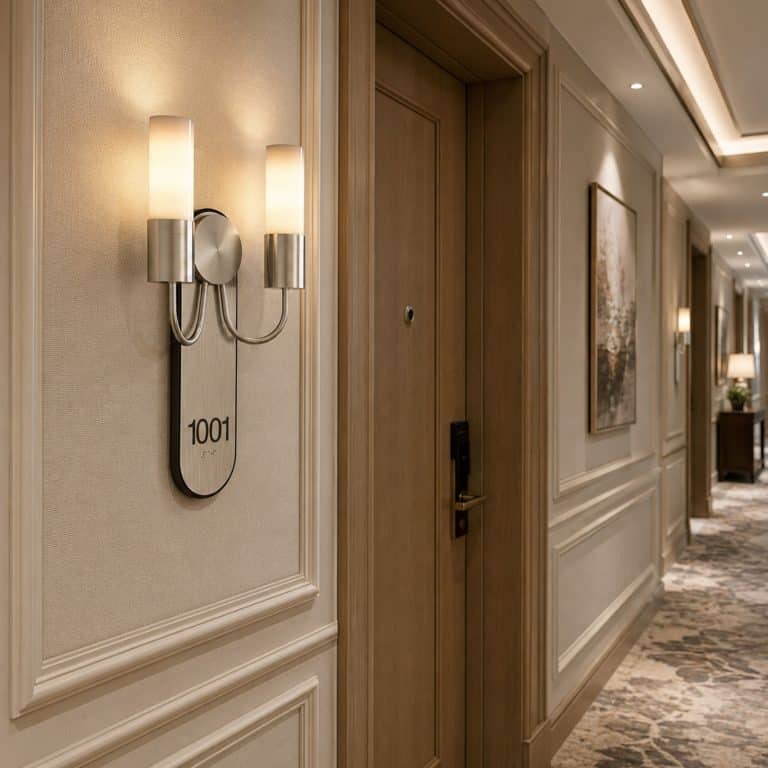
Two lamps can look identical in a showroom and perform very differently after a year in a guest room. One…
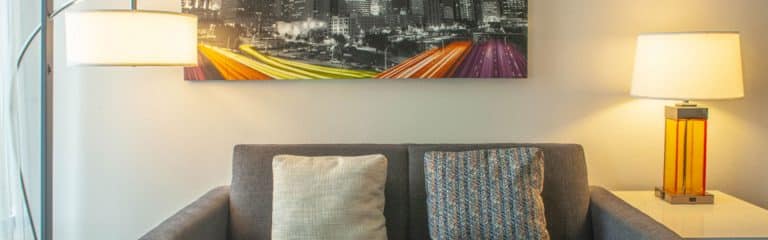
Purchasing agents and designers open most guestroom packages with one question: can one lamp carry USB-C charging and a grounded…
A qualified manufacturer can build a light fixture from your sketch or rendering. Custom light fixture fabrication is how a…
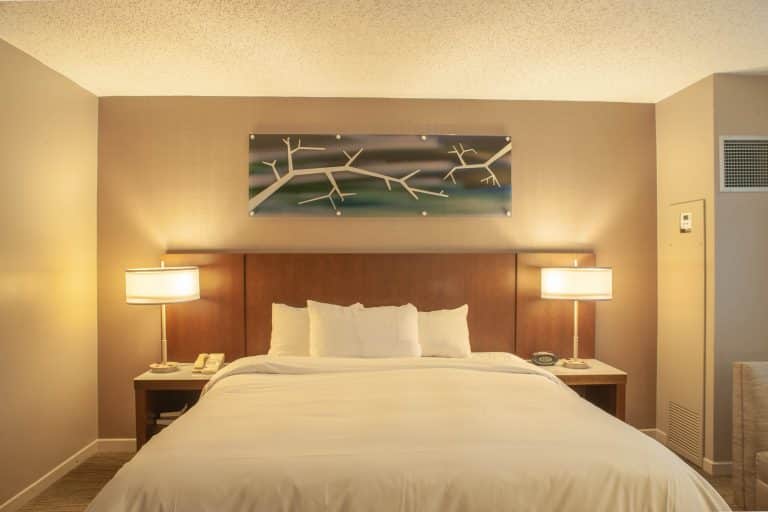
Hotel lighting control is the combination of switches, dimmers, sensors, and drivers that decides when a fixture turns on, how…