A guestroom should feel effortless—everything in its right place, with lighting that supports the moment without drawing attention to itself. That effect rarely happens by chance. It stems from a layered lighting plan that strikes a balance between comfort, functionality, and brand identity.
This playbook translates those principles into clear steps you can apply across room types and brand requirements.
1) Build Four Layers That Work Together
Every well-designed room begins with four layers:
- Ambient: Soft, even light that prevents dark corners and harsh contrast. Quiet ceiling fixtures or concealed sources let finishes take the lead.
- Task: Focused light for reading, grooming, packing, or working. This is where switch logic and aiming matter most.
- Accent: Small highlights that add depth to textures, art, or headboards without glare. Use sparingly for rhythm.
- Wayfinding: Low-level cues that guide movement at night so one guest can move without disturbing another.
Quick Spec Targets:
- Ambient: 75–150 lux average
- Reading at bed/chair: 200–300 lux
- Desk surface: 300–500 lux
- Night path: 1–5 lux at floor
2) Bed Zone That Feels Intuitive
The bed is the first touchpoint most guests interact with, often in a dark room. Simplicity and comfort matter most.
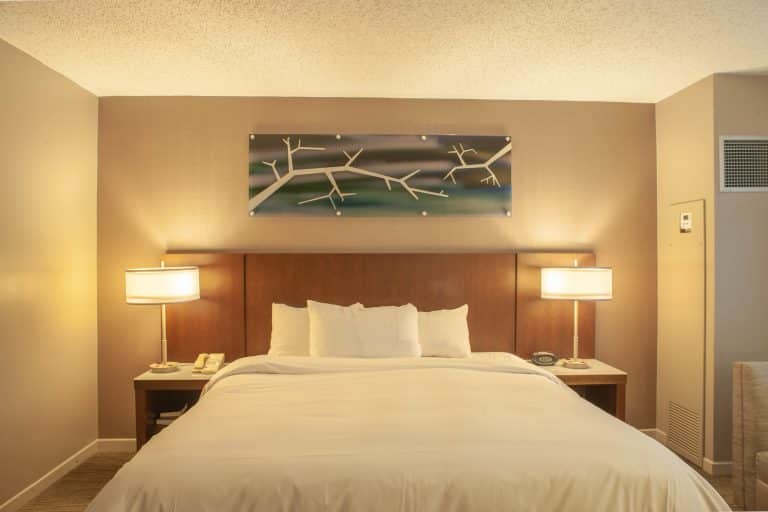
- Pair nightstand lamps with headboard sconces for a cohesive look that enhances both mood and reading.
- Offer independent switching on both sides, featuring smooth and quiet dimming.
- Shield light sources to avoid hot spots on pillows or artwork.
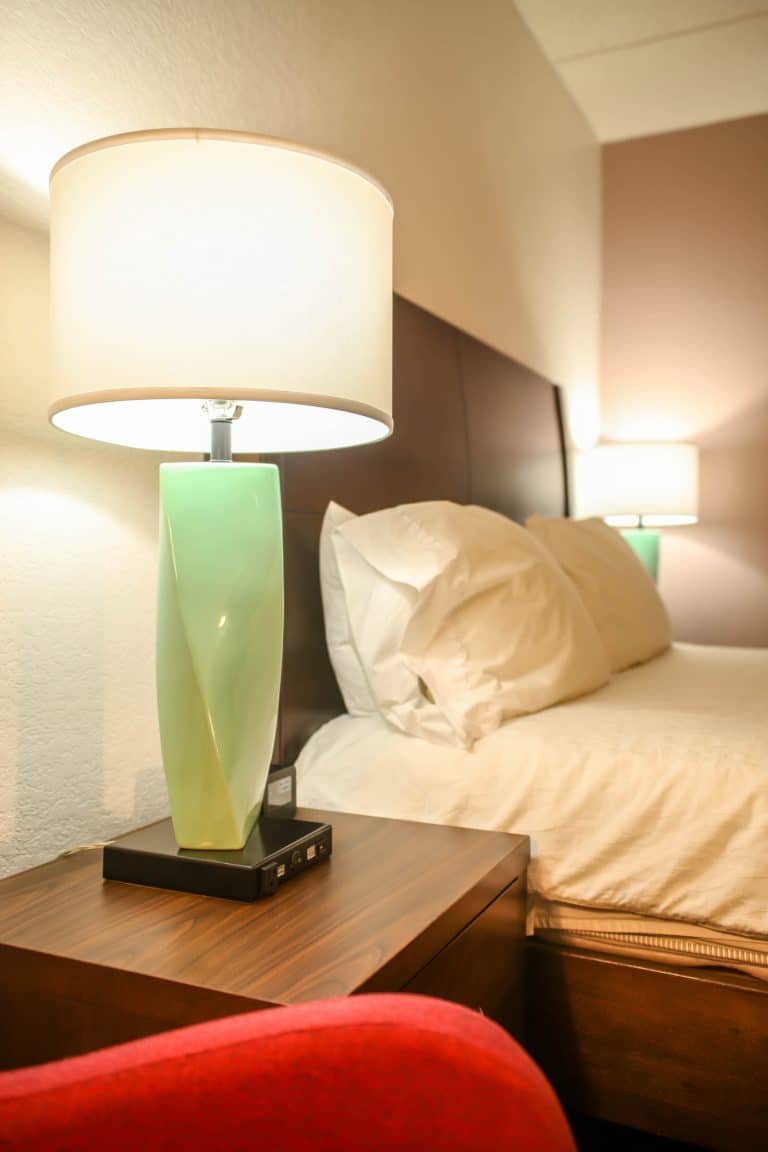
- Integrate USB or wireless charging to reduce clutter at the lamp base.
Prototype Tip: Mock up a headboard with fixtures in place. Test clearances, glare, and controls from a reclined posture—not just standing height.
3) A Work Zone That Actually Works
Guests use the desk for more than email—it may serve as a dining table, a call space, or a work surface.
- Specify desk lamps for hotels with a stable base, fingertip controls, and a glare-cutting shade.
- Aim for a CRI of 90+ so that documents and fabrics appear accurate.
- Stay within 2700–3000K to maintain a warm yet functional tone.
- For compact desks, consider an under-shelf or millwork-integrated light.
4) Lounge and Dining Moments
Even small guestrooms benefit from a place to pause.
- Add a guestroom floor lamp with a weighted base to anchor a reading corner.
- For in-room dining, avoid a single overhead spotlight. Instead, combine a gentle ceiling light with a nearby accent so faces photograph naturally.
5) Ambient Made Elegant
The ceiling plan should evoke a sense of calm and balance.
- Use architectural light for the background, with decorative pieces adding personality.
- Choose quiet flush mounts or compact grazers at drapery pockets.
- Keep drivers accessible for service without moving case goods.
- Where brands allow, offer Day/Night scenes that set multiple zones with one touch.
6) Entry, Wardrobe, and Bath Touchpoints
First and last impressions happen here.
- Entry: Light should reveal the lockset, closet, and luggage bench without glare.
- Closet: Light from the front, not behind the guest, with shallow fixtures that diffuse evenly.
- Bath/Vanity: Vertical light at mirrors flatters skin tones and reduces shadows. Pair sconces with a lighted mirror for a simple, camera-ready solution.
7) Controls That Feel Obvious
Complicated controls are one of the fastest ways to earn poor reviews.
- Keep switch types consistent and label them clearly.
- Provide a master off at the door plus bedside control of bed zone lights.
- Use soft fades on/off to avoid startling guests.
- Limit scenes to two or three; more options rarely add value.
8) Light Quality and Guest Comfort
Glare and poor color rendering undermine even the best room design.
- Use opal or fabric shades on hotel wall sconces and hotel table lamps near seating or beds.
- Aim accent lights so the cut-off stays above seated eye height.
- Avoid exposed filaments at the bedside—they look stylish in lobbies but feel harsh up close.
- Specify CRI 90+ and keep all sources within a tight CCT band for consistent tone.
- In wellness-focused brands, consider using warm dimming to support the natural circadian rhythm.
9) Durability, Sustainability, and Service
Guestrooms face heavy use. Fixtures should withstand daily wear while supporting long-term brand commitments.
- Choose finishes that resist fingerprints and cleaning agents.
- Standardize lamps and drivers across room types for easier maintenance.
- Use replaceable shades and modular components so a single accident doesn’t require a full swap.
- Verify ADA clearances for all projections.
- Favor high-efficacy LEDs, networked controls, and repairable assemblies to reduce waste.
10) Style and Coordination
Cohesion makes even modest guestrooms feel elevated.
- Repeat a small family of forms and finishes across fixtures.
- Use ceiling, pendant, or semi-flush lights only where the scale fits the room.
- Reserve bold statements for art lights or a unique sconce pair.
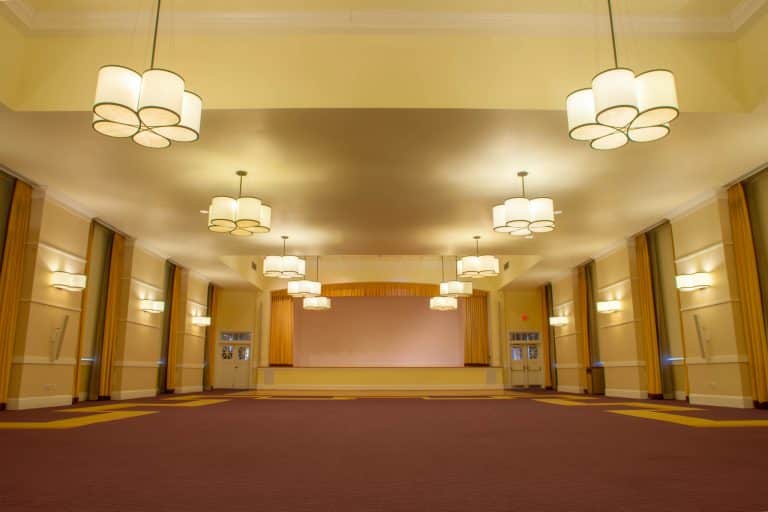
- Subtly echo lobby finishes or profiles—like a brass tone or pendant shape—so the guestroom feels connected to public spaces without borrowing their scale.
11) Submittal and Mockup Workflow
Mockups protect design intent and save time in the long run.
- Request finish rings or shade samples for approval against soft goods.
- Build one full mockup room with final dimming logic and switch locations.
- Take a photograph at night from guest height and from the bed to catch glare issues.
Quick Reference Checklist
Layers: Ambient balance, bedside reading, desk task, selective accents, warm night paths
Optics & Color: CRI 90+, 2700–3000K, shielded sources at eye level
Controls: Master off at door, clear labels, soft fades, limited scenes
Durability: Replaceable lamps/drivers, finishes that withstand cleaning, and modular components
Coordination: Family of forms/finishes, ADA compliance, nighttime photo check for glare
Product Roles That Anchor the Plan
- Hotel table lamps provide ambient lighting and reading comfort without requiring rewiring of walls.
- Headboard sconces free up nightstands and focus the reading light.
- Hotel wall sconces add vertical brightness, making small rooms feel larger.
- Desk lamps for hotels support work and dining with minimal glare, ensuring a comfortable environment.
- Guestroom floor lamps create true lounge moments in compact footprints.
Conclusion
When layered lighting is planned with care, guestrooms feel intentional rather than improvised. Guests enjoy calm evenings, restful nights, and brighter mornings. Designers protect their concept, operations teams gain fixtures that are durable and serviceable, and brands extend their story into the most personal space of all—the room itself.
At Mario Contract Lighting, we help designers bring this playbook to life, from sketch to mockup to rollout, so every guestroom delivers comfort that feels effortless.
CTA: Ready to build your guestroom lighting plan? Explore our Custom Capabilities to see how we design layered solutions that support guest comfort and brand story.