Interior Commercial Lighting: What to Check When Comparing Hotel and Residential Lamps
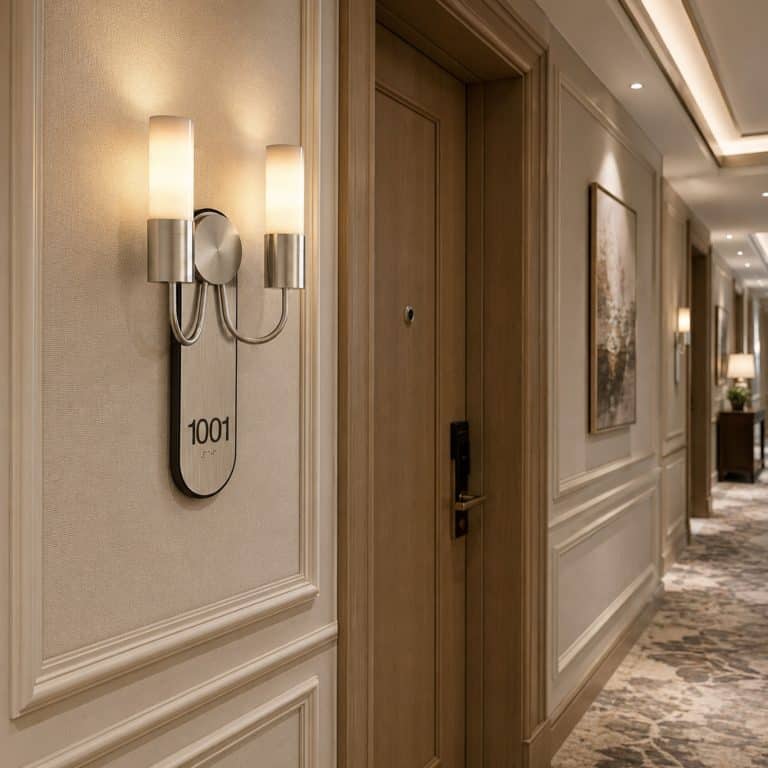
Two lamps can look identical in a showroom and perform very differently after a year in a guest room. One…


Specifying hospitality lighting for a hotel or restaurant is a decision you live with for years. The fixtures have to survive constant use, pass inspection, and still match the design intent across every floor.
This guide gives you a practical framework for choosing contract-grade lighting. It is written for interior designers, architects, purchasing agents, brand program managers, and contractors. They already know the basics and want a clear way to evaluate products.
We cover how to define the contract-grade threshold and how it differs from residential. Then we work through construction, electrical ratings, performance, space fit, serviceability, and procurement. Each section gives you questions to ask and criteria to apply.
Contract-grade lighting is lighting built and certified for commercial use. That means heavier construction, code-compliant wiring, durable finishes, and components rated for constant operation.
Contract-grade is a specification threshold rather than a decorative style. A fixture earns the label by how it is made and tested, so the same clean look can exist at residential quality or contract quality.
For a specifier, this is the quality level you commit to across an entire property. It has to hold up in guest rooms, corridors, lobbies, and public spaces where lights run daily and cleaning crews touch every surface.
The reason the threshold matters is consistency at scale. One handsome fixture in a mock-up room proves very little. The real test is whether 300 of them still match and work three years later.
United States projects generally design to the ANSI/IES RP-9-23 recommended practice, ANSI/IES RP-9-23, Recommended Practice: Lighting Hospitality Spaces (2023), from the Illuminating Engineering Society. It sets light-level and quality guidance for the hospitality environments we serve.
The gap between contract-grade and residential lighting is easy to miss on a showroom floor. Two fixtures can look identical while performing very differently once they are installed and used every day.
The table below compares the two on the areas that decide long-term performance. Use it as a quick screen before you request full cut sheets.
| Specification area | Contract-grade | Residential |
|---|---|---|
| Build and materials | Heavier metal, welded or reinforced joints | Lighter metal, glued or press-fit joints |
| Wiring and certification | UL or ETL listed for commercial use | Basic listing built for light home use |
| Finish durability | Rated for repeated commercial cleaning | Wears under strong cleaners and daily wiping |
| Replacement parts | Stocked and matched for years | Often discontinued within a season |
| Consistency across units | Matched across large production runs | Varies batch to batch |
A residential fixture fails in commercial use because it was designed for a lighter duty cycle. A home lamp switched on a few hours a day is a different job from a corridor sconce that runs around the clock. Specify for the harder job, and the fixture has margin to spare.
Finish is where the difference shows first. Commercial cleaning products are harsh, and a residential coating dulls or peels under them, while contract-grade finish options are chosen to survive those cycles.
The word “contract-grade” on a product page does not settle the question by itself. Some retail lines apply the label to a home fixture with a slightly heavier base. Ask for the listing, the finish testing, the parts policy, and the load rating before you trust it.
Once a fixture clears that first screen, look at how it is built. Construction quality is the clearest signal of whether a product will last through a full renovation cycle.
Start with the metal. Check the gauge, meaning the thickness of the metal. Then look at how parts are joined, since welded or riveted joints hold up better than glue.
Then move to the electrical guts and the load path. Inspect the socket quality and the wire gauge, and confirm that the fixture has proper strain relief. Also check that the fixture weight matches the rating of its mount or canopy.
Shades and diffusers deserve the same attention. Ask what the shade is made of and how it handles heat, because thin materials yellow or warp above a warm lamp.
Weight is a useful proxy when you cannot see inside a fixture. A heavier body usually means thicker metal and better internal bracing. Still, the number that matters is the tested load rating for your mount.
The base and the switch also earn scrutiny in a table or floor lamp. A weighted, non-slip base keeps a lamp upright in a busy room. A rated switch survives thousands of cycles that a home switch would not.
Put your questions to the manufacturer directly. Useful ones include:
Construction tells you a fixture will last. Ratings and code tell you it will pass inspection and stay safe in service.
Start with the listing mark. A UL or ETL listing means an independent lab tested the fixture to a safety standard. Inspectors look for that mark before they approve an install.
Match the location rating to the space. A damp-location rating suits a covered but humid area such as a bathroom. A wet-location rating suits direct exposure near a pool or an open entry.
Confirm the driver and dimming path next. The LED driver has to be compatible with the control system, or you get flicker and buzz that no one wants in a guest room.
Ask the manufacturer to name the driver and the dimming protocol it supports, then check that against the specified controls. Matching them on paper before the order avoids a costly swap during commissioning.
Controls are also a code requirement now, and the rules keep tightening. Under the ASHRAE 90.1-2022 lighting changes, Standard 90.1-2022 requires guest room lighting to be automatically turned off after 20 minutes of the space becoming unoccupied. Adoption varies by jurisdiction, so confirm which version your local code enforces.
That requirement shapes the fixtures you pick, not just the wiring behind them. A specified lamp has to work with an occupancy sensor or a room controller, so verify that compatibility while you are still choosing products.
Performance belongs in the spec decision because energy and lamp life drive the real cost of a fixture. The purchase price is a small part of what a property pays over the life of the product.
The numbers are large at the property scale. According to EPA lodging guidance, lighting is almost a quarter of all electricity consumed in a typical hotel.
The same EPA guidance notes lighting retrofits can reduce lighting electricity use by 50 percent or more. Those retrofits can also cut cooling energy requirements by 10 to 20 percent, per the same EPA guidance.
Field results back this up. A 2014 DOE Hilton Columbus case study found that LED downlights provided 50% energy savings relative to a comparable CFL downlight.
In that same DOE study, the fixtures enabled the lighting power to be more than 20% below that allowed by code. The same DOE study estimated occupancy sensors would add 16% savings in guest room lighting energy.
Total cost of ownership is the honest way to compare two fixtures. Add the purchase price to the energy it will draw and the labor to maintain it. Then judge the options over the years the property will keep them.
Three levers control this outcome when you specify:
A hospitality lighting specification has to fit the room it serves. The same fixture that works in a bright lobby can overwhelm a quiet guest room, so match the product to the space.
Lighting designers plan in layers. Ambient light covers the whole room, while task and accent light handle close work and points of interest. Each space below needs a different mix, which shapes the fixtures you specify.
Lobbies need an even ambient wash that reads as welcoming from the door. Plan the mounting height and spacing so the ceiling plane looks consistent across zones without hot spots or dark corners.
Warm color temperature suits these spaces. Color temperature, measured in kelvin (K), describes how warm or cool the light appears. Design practice puts hospitality public spaces in the warm 2700K–3000K range.
Overhead contract-grade ceiling fixtures carry the ambient layer, while hospitality floor lamps fill seating groups and lounges with softer light at eye level.
Keep the look aligned across adjacent zones. A lobby that flows into a bar or a lounge should hold the same color temperature and a related finish. That way guests read the whole ground floor as one design.
Guest rooms are about comfort and useful task light. Put task light at the bedside and the desk. Set the drop length and shade height so light lands on the page, not in the guest’s eyes.
Warm color temperature again supports rest, while a neutral tone near 4000K works better at a makeup or work area as a design choice. Watch color rendering too, shown as CRI, the color rendering index, which rates how accurately a light shows skin tones and finishes.
Control glare with the shade and the placement. Quality guest room table lamps shield the lamp and spread even light across the surface below.
Integrated outlets and USB ports have become part of the guest room spec. When you choose a bedside or desk lamp, confirm the charging features are rated and placed where a guest will actually reach them.
Dining spaces balance atmosphere with the need to see the food and the menu. Set a target light level at the table, then use dimming to shift the mood across service hours.
A published survey gives a useful benchmark for these levels. A footcandle is a common measure of light reaching a surface.
The IES restaurant lighting survey notes the IES recommends between 3 and 6 footcandles at the dining table (depending on age). In that same IES survey of 50-plus Manhattan restaurants, only 16% reached that brightness, and 75% fell below 1.3 fc at the dining plate.
Use those figures as a spec input so a room feels intimate while guests can still read a menu. Good color rendering helps here too, since food and drink look more appealing under a lamp that shows color accurately.
Bars can run darker than dining rooms, but the transitions still need care. Specify dimming so staff can lift levels for cleaning and cash handling, then lower them again when service resumes.
A fixture that cannot be serviced becomes a liability the day a part breaks. Serviceability is a specification decision, so plan for it before the order goes out.
Confirm that replacement parts are stocked and that sockets, shades, finishes, and mounts can be matched years later. A property that spans hundreds of rooms needs hospitality lighting components that look identical from the first floor to the top.
This is where manufacturer records matter. We have completed more than 14,000 projects since 2000, and we keep the specifications and tooling to remake a matching part. That is how wall sconces for corridors stay consistent across a full run and across future orders.
Ask two questions during selection. Find out how long the manufacturer keeps parts and records for a project. Then ask whether a phased renovation years later can still order fixtures that match.
Distribution matters here as well. We support shipments from both coasts, which shortens freight and helps us coordinate production with install timelines for renovations and new openings.
Procurement turns a good specification into delivered fixtures on schedule. The details you settle here decide whether the install stays on track.
Work through this checklist before you place an order:
MOQ is the minimum order quantity, the smallest number of units a factory will produce per order, and it affects both price and packaging. Custom is warranted when a brand standard, an odd dimension, or a specific mount rules out stock. You can request a custom fixture when a project calls for it.
Lead time is the constraint that surprises teams most often. Contract orders run in production batches, and a rushed schedule can push cost up or force a substitution. Lock quantities and dates as early as the design allows.
Custom work follows brand programs closely. We support approved programs such as Hyatt House, Hyatt Place, and Garner by IHG. Every product we make can be adjusted in finish, material, size, or mounting to meet a standard.
What does contract-grade lighting mean?
Contract-grade lighting is built and certified for commercial use, with heavier construction, code-compliant wiring, durable finishes, and components rated for constant operation.
Is contract-grade the same as commercial-grade lighting?
The terms are used interchangeably in practice, since both describe fixtures made to survive commercial duty cycles and pass code, rather than a home-use product.
Is contract-grade lighting required for hotels?
Brand standards and local code effectively require it, because hotel fixtures must carry proper listings, meet control rules, and hold up across constant daily use.
What certifications should I look for?
Look for a UL or ETL listing for safety. Also confirm the correct damp or wet location rating for the space, a mark inspectors will check.
Can I use residential fixtures in a hospitality project?
Residential fixtures generally miss the commercial listings and finish durability that define contract-grade, so they are a poor fit for a hospitality project.
What makes a finish contract-grade?
A contract-grade finish is tested to survive repeated cleaning with commercial products without dulling or peeling over the life of the fixture.
A sound specification moves through the same order every time. Confirm the certification and construction, check the finish and the code path, then plan serviceability and procurement before you commit.
That framework protects the design intent and the budget across a full property. It turns a vague “contract-grade” label into criteria you can defend to a brand and to an owner.
The payoff is fewer surprises. When the certification, the finish, the code path, and the parts plan are settled up front, the install runs on schedule. The property then looks right for years after opening.
Mario Contract Lighting has manufactured hospitality lighting since 1922, and we build to that standard from a 100,000-square-foot facility in Roanoke, Virginia. We are an approved vendor for brands such as Hilton, Marriott, IHG, Hyatt, Wyndham, and MGM Resorts. That lets us help specifiers hold quality steady from prototype through multi-property rollout.
Explore our Custom Capabilities or schedule a consultation today.
Recent News & Updates
Two lamps can look identical in a showroom and perform very differently after a year in a guest room. One…
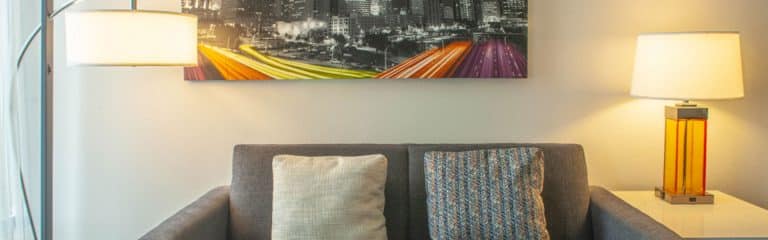
Purchasing agents and designers open most guestroom packages with one question: can one lamp carry USB-C charging and a grounded…
A qualified manufacturer can build a light fixture from your sketch or rendering. Custom light fixture fabrication is how a…
Choosing a hospitality lighting manufacturer is one of the first sourcing decisions on a hotel project. The choice shapes your…