Hotel Lamps With USB: How to Specify USB-C and Built-In Outlets
Purchasing agents and designers open most guestroom packages with one question: can one lamp carry USB-C charging and a grounded…


Two lamps can look identical in a showroom and perform very differently after a year in a guest room. One still switches cleanly and holds its finish. The other wobbles at the neck and shows wear where housekeeping wipes it every morning.
In interior commercial lighting, that gap comes down to four things: construction, certification, compliance, and serviceability. This guide explains what to evaluate in each area and how to verify it on a sample or cut sheet before a purchase order goes out.
We write from a manufacturer’s position. Mario Industries has manufactured lighting since 1922, and Mario Contract Lighting entered the contract-lighting sector in 2013 and has completed more than 15,000 projects. The checks below reflect what we see on production floors and in finished rooms.
“Hotel grade” and “contract grade” are not formal certifications, and no single universal construction standard defines them. The terms describe fixtures developed for commercial applications, where durability, stability, electrical safety, finish performance, serviceability, and consistency across larger production quantities matter. A residential lamp is generally built for lighter home use.
Lamps are the fixtures guests interact with most in a hotel room. Ceiling fixtures set general illumination, but guests reach for the lamps on the nightstand and the desk. Housekeeping moves those lamps to clean, and cleaning crews touch every surface with strong products on a daily schedule.
A residential lamp is designed for a lighter duty cycle. A home lamp used for a few evening hours does a different job than a guest room lamp handled by a new occupant nightly. Specify for the harder job, and the lamp has margin to spare.
The stakes rise with scale. One handsome lamp in a mock-up room proves very little. The real test is whether 300 of them still match and work three years later.
Interior commercial lighting is lighting built and certified for commercial interiors such as offices, retail stores, healthcare facilities, and hotels. Much of the discussion around the category centers on overhead fixtures, which can leave lamps underexplained. Our contract-grade lighting guide covers the full fixture range, and this article narrows the focus to hotel lamps.
Because no formal certification defines hotel grade, the label is best treated as a set of factors a specifier evaluates, not a fixed recipe. Those factors are base stability, structural construction, cord strain relief, socket and switch quality, electrical listing, finish suitability, shade durability, ease of maintenance, consistency across production quantities, and the availability of replacement components.
A suitable hospitality fixture may use metal, ceramic, wood, acrylic, glass, or other materials. The joining method depends on the design and manufacturing process. Glued, fastened, press-fit, welded, and mechanically assembled components can all be appropriate when they are properly engineered for the application. The same clean silhouette can exist at residential quality or at commercial quality, which is why performance has to be confirmed on paper and on a sample, since a photo cannot show it.
The table below compares typical priorities for each grade on the areas that decide long-term performance. Use it as a quick screen before requesting full cut sheets.
| Evaluation area | Hospitality (contract) focus | Typical residential focus |
|---|---|---|
| Base and structure | Stability and joining engineered for frequent handling | Engineered for occasional home use |
| Cord, socket, and switch | Strain relief and components chosen for repeated daily cycling | Components sized for light home use |
| Electrical listing | UL or ETL listed to the applicable standard | UL or ETL listed to the applicable standard |
| Finish and shade | Selected and tested for commercial cleaning and sustained use | May wear under strong cleaners and daily wiping |
| Maintenance and parts | Designed for servicing; parts availability reviewed with the manufacturer | Parts are often limited or discontinued |
| Consistency across units | Controlled across larger production quantities | May vary batch to batch |
Finish is often where the difference shows first. Commercial cleaning products are harsh, and a coating not chosen for them can dull or peel. Joints and switches follow when they were never engineered for nightly handling by strangers.
The word “contract grade” on a retail product page does not settle the question by itself. Some retail lines apply the label to a home lamp with a slightly heavier base. Ask for the listing, the finish testing, the parts approach, and how the construction was engineered for commercial use before you trust it.
Commercial interiors are often planned in layers of light, commonly described as ambient, task, accent, and decorative. The U.S. General Services Administration’s lighting guidance calls layering light the best proven lighting strategy and defines task and accent lighting.
Ambient light sets general illumination and task light supports reading and work. Accent light draws the eye to features, while decorative fixtures carry the design language of the space.
Common examples of commercial lighting in a hotel include ceiling fixtures, corridor sconces, headboard wall lamps, and table and floor lamps. Lamps usually carry the task and decorative roles in guest rooms and lobbies. They work best when coordinated with the ceiling and wall fixtures as part of one layered plan.
Nightstand lamps are among the most frequently used fixtures in a guest room. Guests expect to control light from the bed, so switch placement and dimming capability matter more than ornament. A lamp that makes a guest reach awkwardly or leave the bed to switch it off creates frustration and negative feedback.
Desk lamps get adjusted and repositioned often. Stable bases and intuitive switching are typically prioritized over decorative details in this category. Where full dimming is not required, multi-level switching still improves usability.
Table lamps on dressers and credenzas carry more of the room’s visual balance. Scale is the controlling variable here, since a lamp has to be proportionate to the furniture and the ceiling height. Shade material and shape then decide light distribution and glare control.
Integrated USB or USB-C charging is increasingly common at nightstands and desks. When specified, charging components must be durable and compatible with the applicable electrical requirements. Our hotel table lamps can be reviewed for adjustments around these guest behaviors, including switch location and charging hardware, subject to manufacturing and listing feasibility.
Guest room floor lamps usually sit near seating areas where overhead light may not provide enough coverage. They supplement ambient light and help define secondary zones within the room. Stability and footprint matter, because a floor lamp in a high-traffic room gets bumped by guests and moved by housekeeping.
Lobby floor lamps face a harder job. Public areas require materials that perform under constant use and cleaning. A lobby lamp is also touched by far more people than a guest room lamp. A tall, top-heavy lamp in a lounge is also easier to tip than a compact table lamp.
That puts base stability and finish choice at the top of the specification for hotel floor lamps in public spaces. Footprint then has to fit the furniture plan so the base does not crowd a walkway.
Construction quality is one of the clearest signals of whether a lamp will last through a full renovation cycle. Working from the base up gives purchasing teams a repeatable way to inspect a sample. Each step below pairs a component with the question to put to the manufacturer.
Weight alone is not a reliable proxy for quality. A heavier body may indicate thicker material, but a lighter lamp can be stable and durable when properly engineered. The construction method, the components, and sample testing tell you more than the scale does.
Material choice sits under every step in that sequence. Metal suits bases and structural parts because it is durable and accepts multiple finishes. Ceramic lamp bodies resist deformation and hold brand-specific finishes consistently. Glass adds clarity and refinement when it is protected against impact in high-traffic locations.
Acrylic is impact resistant and lightweight, which suits diffusers and decorative elements. Wood and veneers bring warmth to a room, but they must be properly sealed for hospitality environments. Our page on material selection for hospitality maps each material to guest rooms, corridors, public areas, and bathrooms.
Controlled processes such as metal fabrication, ceramic casting, acrylic forming, and wood routing support consistent results across a production run. The finish is the last layer of that process and the first one guests touch. Review our commercial finish options early, because a finish change after approval can reset the sample cycle.
Construction tells you how a lamp is likely to hold up. Certification and code address electrical safety and compliance, which makes them among the most verifiable parts of any specification.
Each item in this section comes with a document or a rating a manufacturer can produce on request. If a supplier cannot produce it, treat the claim as unconfirmed.
UL Standards & Engagement publishes the UL 153 portable luminaire standard, which covers portable luminaires whose primary function is task or ambient illumination. Portable table and floor lamps are generally evaluated under it. Permanently installed fixtures such as ceiling fixtures and sconces in non-hazardous locations generally follow UL Standards & Engagement’s UL 1598 luminaire standard. The final requirement depends on the product, the installation, the applicable code, and the authority having jurisdiction.
Neither standard is a hotel category. The standard follows the product type, so a residential table lamp and a hotel table lamp are both evaluated as portable luminaires. A UL or ETL listing addresses electrical safety. It does not, by itself, prove that a fixture will withstand commercial cleaning, repeated handling, or long-term hotel use.
UL LLC and Intertek, which issues the ETL mark, both appear on OSHA’s list of recognized NRTLs. Under OSHA’s NRTL program, products properly certified by an OSHA-recognized NRTL are acceptable to OSHA for use in the workplace. Per OSHA’s NRTL program FAQ, OSHA inspectors may check whether a product carries an NRTL certification mark.
Durability for commercial duty has to be evaluated separately from the listing. Match the location rating to the space as well.
The NEC definition of a damp location covers locations protected from weather, not subject to saturation but subject to moderate moisture. Its examples include partially protected locations under canopies or roofed porches. A covered, humid area such as near a bathroom vanity may call for a damp rating; confirm with the project’s code requirements.
ADA compliance depends on how and where a fixture is installed, not simply on the product label. In accessible guest rooms and along accessible routes, light switches can count as operable parts. The U.S. Access Board states in its Access Board reach-range guidance that unobstructed forward and side reach both run 15″–48″. The same U.S. Access Board guide limits operable parts to no more than 5 lbf of operating force.
The Access Board operable parts guide says compliance is required for operable portions of fixed elements, not for non-fixed components. A portable lamp’s own switch may therefore not be directly regulated, though wall switches that control lighting must comply. Treat the 15″–48″ range for lamp switches as good practice unless project requirements apply.
For bedside use, the switch location on the lamp and the nightstand height together decide whether a guest can reach the control. A switch on the socket shell of a tall lamp can land outside the range once the lamp sits on a high nightstand. A cord or base switch is often the simpler fix.
Swing-arm wall lamps paired with nightstand lamps may face a second rule. The U.S. Access Board’s protruding objects limits allow a 4-inch maximum projection into circulation paths for objects with leading edges 27″–80″ above the floor. Where that applies, it shapes arm length before the design is finalized.
Apply these requirements only where the accessibility standards and installation conditions make them relevant, such as accessible guest rooms and circulation paths. Review them early to avoid rework later in the project. Our summary of ADA lighting requirements covers how they apply across hospitality spaces.
The U.S. Department of Energy codified a 45 lumens per watt rule as a backstop requirement for general service lamps, effective July 25, 2022. It applies to covered general-service lamps, meaning the bulbs, and it is not a general hotel-lighting requirement. It does not define whether a complete fixture is suited to hotel use.
According to a DOE guide, LEDs may use at least 75% less energy and last up to 25 times longer than incandescent.
Longer source life shifts the failure points. When the light source outlasts incandescent by that margin, the lamp’s own components become the limiting factor, starting with the switch and socket. The finish then has to last as long as the source does.
Confirm dimmer compatibility as well. An LED source paired with an incompatible driver or dimmer produces flicker and buzz that no one wants in a guest room. Ask the manufacturer to name the driver and dimming protocol, then check them against the specified controls.
Use this checklist when comparing samples and cut sheets from competing suppliers. It covers the lamp itself and the manufacturer behind it, since a lamp is only as serviceable as its supplier’s parts support.
Serviceability is the hidden cost driver in that list. Residential parts are often discontinued, so a broken shade can force a full lamp replacement. Access to replacement lamp shades can let a property repair one unit and keep the room set matched. Replacement parts, finish matching, and future reproduction still depend on material and component availability, so treat them as items to plan for with the manufacturer, not permanent guarantees.
The manufacturer check matters as much as the sample. Approved-vendor status with major hotel brands can indicate a supplier has experience working within brand standards. The production path matters too, because it affects lead time and cost on multi-property rollouts.
No. “Hotel grade” is not a formal certification or code category. Electrical listing requirements depend on the product, installation, applicable code, and authority having jurisdiction, and ADA requirements apply based on how and where a fixture is installed. Durability for hotel use is a specification a property evaluates on top of those requirements.
It can, and it may carry a valid UL or ETL listing, but a listing does not show how it will handle commercial cleaning and repeated handling. A lamp designed for a lighter duty cycle often wears first at the finish or switch, and its replacement parts may be hard to source.
Plan for the property’s renovation cycle instead of a fixed number of years. Because LED sources can last up to 25 times longer than incandescent, per DOE, the lamp’s construction usually sets its service life.
Not necessarily, because many hospitality projects use modified standard forms with adjusted finishes and dimensions instead of fully bespoke designs. That approach helps keep budget and schedule under control, and final cost is project-dependent and established during quoting.
Suitability for hotel use is verified by construction, listing, compliance, and serviceability, not by a label. Appearance alone cannot confirm it, because a residential lamp and a hospitality lamp can share the same silhouette. In interior commercial lighting, the lamp is the fixture guests handle most, so it is where a specification shortcut shows first.
Mario Industries has manufactured lighting since 1922 and has been family-owned across four generations. Mario Contract Lighting entered the contract-lighting sector in 2013, operates a 100,000-square-foot manufacturing facility in Roanoke, Virginia, and has completed more than 15,000 projects.
According to our About page, Mario is an approved vendor for major hospitality brands including Hilton, Marriott, IHG, Hyatt, Wyndham, and MGM Resorts. Our team can review modifications to finishes, dimensions, shades, materials, mounting, and electrical components, with every proposed change subject to manufacturing and listing feasibility. If your next project needs lamps that still match three years after opening, we can review the specification with you.
Explore our Custom Capabilities or schedule a consultation today.
Recent News & Updates
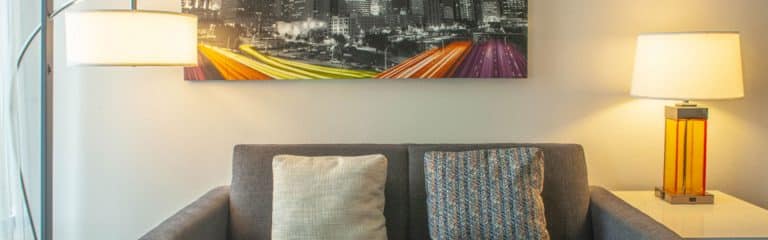
Purchasing agents and designers open most guestroom packages with one question: can one lamp carry USB-C charging and a grounded…
A qualified manufacturer can build a light fixture from your sketch or rendering. Custom light fixture fabrication is how a…
Choosing a hospitality lighting manufacturer is one of the first sourcing decisions on a hotel project. The choice shapes your…
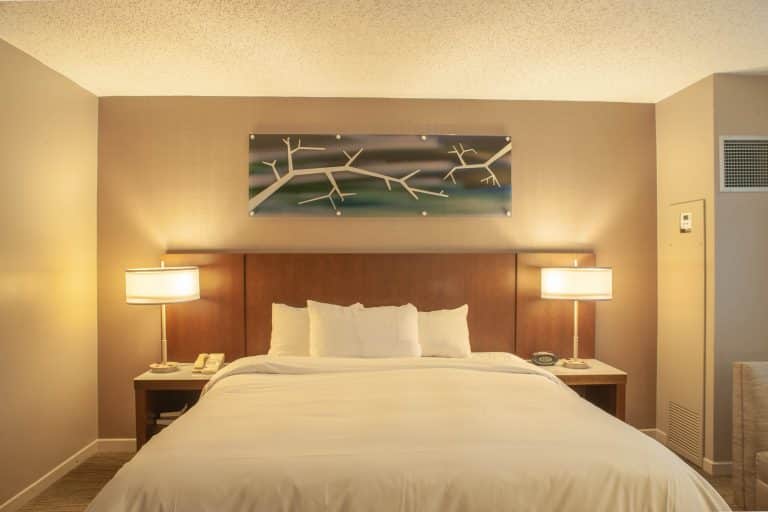
Hotel lighting control is the combination of switches, dimmers, sensors, and drivers that decides when a fixture turns on, how…