Commercial hospitality lighting shapes how a hotel feels from the moment a guest walks in. This guide explains what the category is and how to specify it well on real projects.
You will find room-by-room guidance, a look at smart controls and code, common mistakes to avoid, and a checklist for choosing a manufacturer. It speaks to the people who specify and buy lighting for hotels: interior designers, architects, purchasing agents, brand program managers, and contractors.
What Is Commercial Hospitality Lighting?
Commercial hospitality lighting is contract-grade lighting engineered for hotels and hospitality venues, including guest rooms, lobbies, corridors, restaurants, and ballrooms. It has to look good and hold up to heavy daily use.
This category differs from standard commercial or residential lighting in a few clear ways. Fixtures are built for near-constant operation, brand consistency across properties, guest comfort, and long service life under commercial cleaning. Contract-grade construction means the fixture is made to be serviced and to survive years of handling.
Lighting matters here because it drives first impressions and brand perception. A warm, well-planned lobby signals quality before a guest reaches the front desk, while poor lighting undercuts even a well-designed space.
The audience for these decisions is broad. Designers and architects care about mood and sightlines. Purchasing agents watch cost and lead time, while brand program managers guard the standard across every property.
Our hospitality lighting expertise starts from that manufacturing reality, not from styling alone. A fixture that photographs well but fails after a year of cleaning becomes a cost to the property. That is why we treat serviceability and finish durability as design inputs from the first sketch.
Why Lighting Drives The Guest Experience And The Bottom Line
Lighting sets the mood a guest remembers and carries a real operating cost. Hotels run around the clock, so every fixture burns energy and needs maintenance labor. That makes efficiency a budget decision, not only a design one.
LED lighting is the practical answer for properties that never fully close, and the U.S. Department of Energy (DOE) makes the efficiency case plain. Residential LEDs, especially ENERGY STAR rated products, use at least 75% less energy and last up to 25 times longer than incandescent lighting, per DOE LED lighting energy savings.
Longer life also means fewer lamp changes across hundreds of rooms. That cuts labor hours and reduces the guest disruption that comes with sending a technician into an occupied room. On a multi-property rollout, those savings compound fast.
The macro picture backs this up. The DOE LED savings forecast projects that energy savings from LED lighting could top 569 TWh annually by 2035. That equals the annual energy output of more than 92 1,000 MW power plants.
For an owner, efficiency is what makes a lighting upgrade pay for itself over the fixture’s life. The return grows when you factor in warranty coverage and fewer emergency service calls. A well-specified fixture can be built for the exact wattage, output, and control method a project needs.
The Layers Of Hotel Lighting
Good commercial hospitality lighting is rarely one bright source. It combines several layers that each do a different job, building depth and comfort while keeping the space functional.
Thinking in layers also helps you specify the right fixture for each purpose. The sections below define the main layers and connect each to fixture types you can actually order.
Ambient, Accent, Task, And Decorative Lighting
Ambient lighting is the base illumination that lets people move safely through a space. In a lobby or corridor, recessed or surface ceiling light fixtures usually carry this layer.
Accent lighting highlights art, architecture, textures, or a feature wall. It adds contrast and guides the eye toward what the brand wants guests to notice. Beam control matters most here, since a tight, well-aimed beam reads as intentional design.
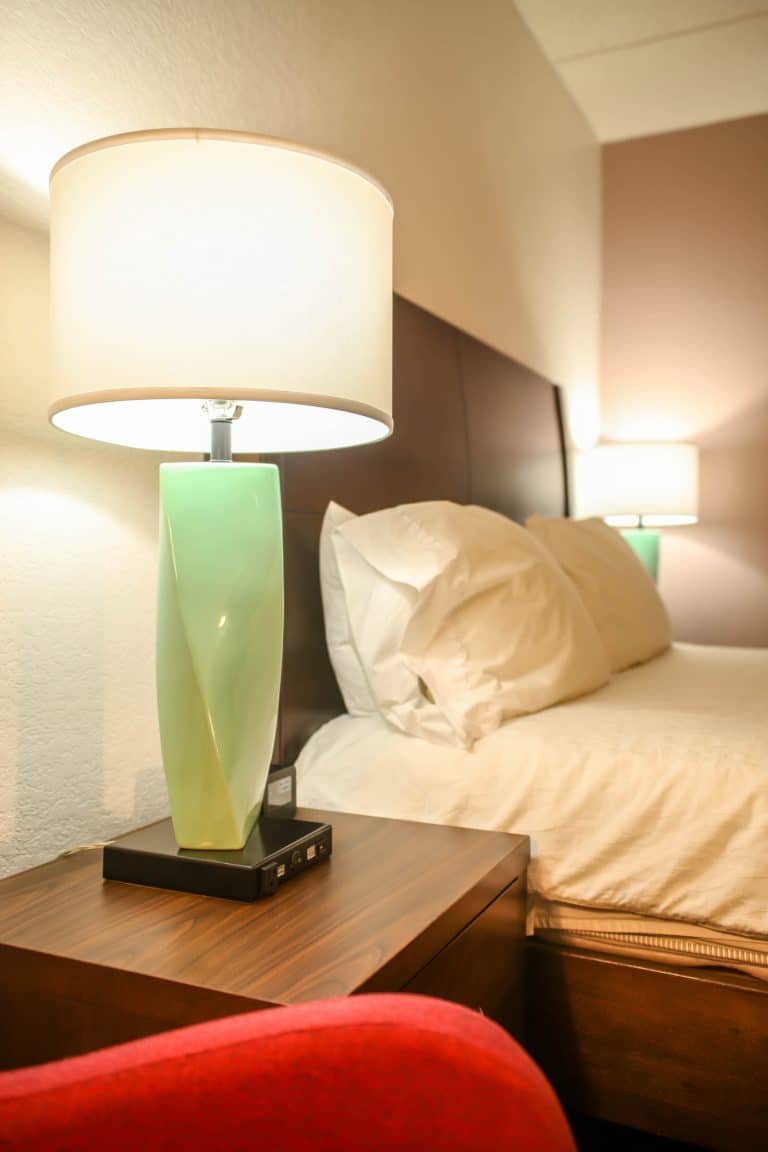
Task lighting delivers focused light where a guest works or reads. At the bed and desk, bedside table lamps give guests direct, adjustable light for reading or packing. A good task lamp puts light where it is needed without spilling glare across the room.
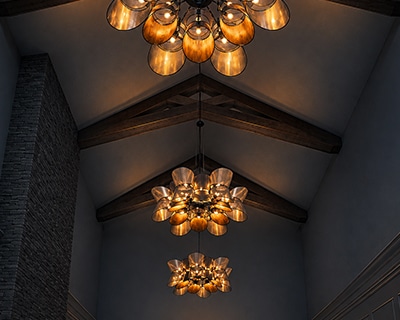
Decorative lighting is the brand-defining layer, made of statement chandeliers and pendants that set the visual tone. Our guide to pendant lighting in hotels shows how decorative fixtures anchor a room’s identity while still doing real lighting work.
Emergency And Safety Lighting
Hotels also need emergency and egress lighting to meet code. This includes illuminated exit signs and backup corridor lighting that stays on if power fails. These requirements depend on the local code and the building’s layout, so confirm them early and treat them as non-negotiable on every project.
Coordinate this layer with the local authority having jurisdiction before you finalize fixture counts. Retrofitting egress lighting after inspection is costly and can delay an opening.
Room-By-Room Lighting Guide For Hotels
Each hotel zone asks for a different mix of layers and a different mood. CCT, or correlated color temperature, describes how warm or cool the light looks, measured in kelvin. Lower numbers look warmer and more golden, while higher numbers look cooler and whiter.
The table below gives common-practice CCT ranges and the top lighting priority by zone. Treat these as typical design guidance, not as a published standard, and confirm final values against your brand book and project goals.
| Hotel Zone | Common CCT (Typical Practice) | Lighting Priority |
|---|---|---|
| Lobby / Reception | 2700–3000K | Welcoming ambient base plus decorative statement fixtures |
| Guest Rooms | 2700–3000K | Warm, layered comfort with strong task light at bed and desk |
| Corridors | 2700–3000K | Even, low-glare wayfinding and safety |
| Restaurants / Bars | 2200–2700K | Warm mood with accurate color on food and skin tones |
| Conference Rooms | 3500–4000K | Brighter, neutral light for focus, with dimming for AV |
In the lobby, pair an ambient base with a decorative focal fixture that carries the brand. The reception desk needs enough task light for staff to read documents without casting harsh shadows on faces. Aim to avoid a dim entry that reads as low quality, since the lobby sets the tone for the whole stay.
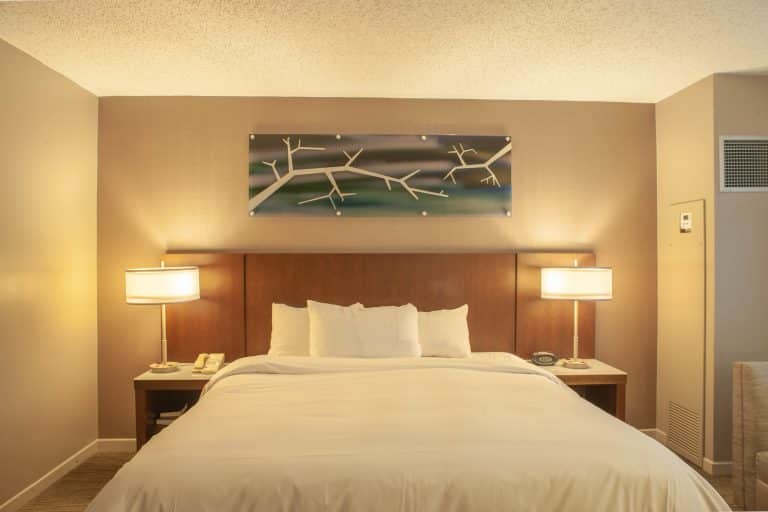
Guest rooms need the most careful layering, since one guest wants to relax while another wants to work. Give the bed and desk dedicated task light, add warm ambient fill, and keep switching simple so guests can control zones without a manual.
Corridors reward even, comfortable light that avoids bright-and-dark patches. Wall-mounted wall sconces add rhythm and warmth along long hallways while supporting safe wayfinding. Corridors also run every hour of every day, so long-life fixtures pay back quickly here.
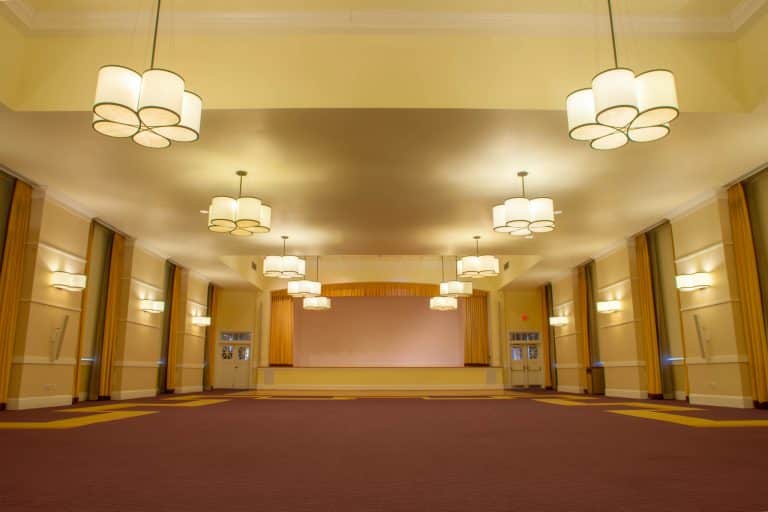
Ballrooms and other public spaces raise the stakes again, since they host events that guests photograph and remember. These rooms usually need flexible, dimmable lighting plus decorative fixtures that match the property’s identity. Illuminated room signs and numbers also belong in the plan, because they guide guests and reinforce the brand at every doorway.
Restaurants and bars lean warmer and dimmer to set mood, but they still need accurate color on plated food. Conference rooms move the other way, toward brighter and more neutral light, with dimming so the room adapts to presentations. Recessed ceiling fixtures on a dimmer handle most of this work.
The vanity deserves special attention because guests judge grooming and makeup there. A DOE hotel lighting field study citing IES notes that IES recommends 200 lx for ages 25-65 and 400 lx for ages over 65. Those targets cover both the horizontal illuminance at the vanity and the vertical illuminance at face height. That guidance comes from the IES Lighting Handbook, 10th edition, so verify it against the current ANSI/IES RP-9-23 (2023) for your project.
Older guests need more light, so design the vanity for the higher target when you can. Placing light on both sides of the mirror, near face height, reduces the shadows a single overhead fixture creates.
Technical Specifications That Matter: CCT, CRI, UGR, And Beam Angle
Four specifications drive most commercial hospitality lighting decisions. Understanding each one helps you compare fixtures on more than price.
CCT (correlated color temperature) sets the warmth of the light. Warm color temperatures suit guest rooms and restaurants, while cooler, more neutral light fits work-focused spaces like meeting rooms.
CRI (color rendering index) measures how accurately a light source shows color against daylight, on a scale up to 100. High color rendering matters wherever skin tones, food, finishes, and fabrics must look true, so specifying high-CRI sources is common practice in hospitality.
UGR (unified glare rating) describes how likely a fixture is to cause visual discomfort. Lower UGR values mean less glare, which matters in corridors and lobbies where guests look toward fixtures.
Beam angle is how wide the light spreads from a fixture. Narrow beams work for accent lighting on art, while wide beams suit ambient coverage across a room. Getting beam angle right often decides whether an accent looks crisp or washed out.
Ground your numbers in a recognized standard rather than guesswork. The ANSI/IES RP-9-23 hospitality standard is the current US recommended practice for lighting hospitality spaces, published in 2023. Be candid that exact target values are project- and standard-dependent, so specify against the standard your design must meet.
Smart Controls And Dimming For Hotels
Controls decide how guests and staff actually use the light. Dimming alone can transform a space, letting a restaurant shift from bright lunch service to a softer dinner mood. Scene presets store those settings so staff can recall them with one button.
Two control protocols come up most often on hospitality projects. The 0-10V standard is a simple analog method for dimming a fixture up and down.
The DALI-2 lighting control standard is more advanced. DALI is specified in the international standard IEC 62386, and DALI-2 is the certification program that confirms products interoperate.
Which one a property needs depends on its tier and goals. A limited-service hotel may only need 0-10V dimming. A full-service or luxury property often justifies addressable DALI-2 control for scene setting and fixture-level diagnostics.
Controls are also a code issue. The ASHRAE 90.1-2022 hotel lighting controls requirements add a duty, as adopted by applicable codes. Under Section 9.4.1.3, hotel guest room receptacles must be automatically controlled and turned off after 20 minutes of the space becoming unoccupied.
Plan for occupancy-based control early, because retrofitting it later costs more. Deciding the control method up front also lets the manufacturer wire and test fixtures for that protocol before they ship.
The 5’7″ Rule And Other Design Principles
The 5’7″ rule is a placement guideline that mounts decorative and wall fixtures so their light works near average eye level. The goal is light that flatters faces and feels natural, rather than harsh light from far overhead. Sconces and mirror lighting placed around this height help guests look their best.
The rule is a starting point, not a law. Ceiling height and fixture size shift the ideal position, and the mounting surface can change it further. Verify placement against the actual room and the fixture’s photometrics.
Two other principles carry most projects. First, layer every space so no single fixture has to do everything. Second, keep color temperature and finish consistent within a zone, so the eye reads the space as one designed environment.
Consistency across properties protects a brand’s look at scale. It is easier to hold when fixtures come from one manufacturer.
Common Commercial Hospitality Lighting Mistakes
Most lighting problems in hotels trace back to a short list of avoidable errors. Here are the frequent ones and the fix for each.
- Key point: Mixed color temperatures make a space look unplanned. Specify one CCT per zone and confirm it across every fixture supplier.
- Key point: Under-lighting leaves guests squinting at the vanity or desk. Design task areas to the higher illuminance targets, especially for older guests.
- Key point: Skipping layers gives flat, dull rooms. Combine ambient, accent, task, and decorative light in each key space.
- Key point: Low-quality fixtures fail early and cost more over time. Choose contract-grade construction built to be serviced, not replaced whole.
- Key point: Missing controls waste energy and can fail code. Plan dimming and occupancy control before installation, not after.
- Key point: Poor glare control tires guests and staff. Specify lower-UGR fixtures and shield bright sources in sightlines.
Finish durability is the mistake people notice last and regret most. Fixtures face daily cleaning chemicals and constant handling, so durable fixture finishes that survive commercial cleaning cycles protect both appearance and budget. Ask any manufacturer how a finish is applied and how it holds up to the cleaners your housekeeping team actually uses.
How To Choose A Hospitality Lighting Partner
The right commercial hospitality lighting partner does more than sell fixtures. Use this checklist when you evaluate suppliers for a hotel project.
- Contract-grade construction: Confirm fixtures are built for constant use and can be serviced in place.
- Customization ability: Check whether finishes, sizes, mounting, and materials can be adjusted, or an original fixture built.
- Brand-program approvals: Verify the supplier is approved for the hotel brands you specify.
- Technical and spec support: Ask who helps with photometrics, controls, code questions, and submittals during design.
- MOQs and lead times: Get minimum order quantities and lead times in writing before you commit.
- Multi-property consistency: Confirm the supplier can repeat the same fixture and finish across every location.
Mario Contract Lighting meets that checklist as a family-owned US manufacturer operating since 1922, now in its fourth generation. We run a 100,000-square-foot facility in Roanoke, Virginia, and have completed more than 14,000 projects since 2000.
We combine domestic production with long-term global manufacturing partners, choosing the path based on materials and lead-time needs, along with the project’s cost target. With distribution support on both coasts, we reduce freight complexity and align production schedules with installation dates. That matters most on renovations and new openings, where a slipped lighting delivery can stall the whole floor.
Our brand experience is specific and verifiable. We support approved brand programs for Hyatt House and Hyatt Place, plus Garner by IHG. We are also an approved vendor for Hilton, Marriott, IHG, Hyatt, Wyndham, and MGM Resorts.
Because we build to order, our custom fixture development can adjust any product or create an original design to match your brand standard. That flexibility helps a project hold its design intent while staying inside budget and lead-time targets.
Frequently Asked Questions
What is hospitality lighting?
Hospitality lighting is contract-grade lighting engineered for hotels and similar venues, built to handle constant use while shaping guest comfort and brand image.
What type of lighting is best for hotels?
LED lighting layered by function is best for hotels, because it combines energy efficiency with the warm light guests expect. According to ENERGY STAR LED performance data, ENERGY STAR certified LED lighting products use 90% less energy and can last 25 times longer than traditional incandescent lighting.
What CCT should hotels use?
Warm color temperatures are common practice in guest rooms, lobbies, corridors, and restaurants, while cooler light suits meeting spaces. Confirm exact values against your brand standard and project goals.
Is LED lighting good for hotels?
Yes, LED lighting is well suited to hotels because it cuts energy use and lasts far longer. That reduces both operating cost and maintenance labor across many rooms.
How do I choose lighting for guest rooms?
Layer ambient, accent, task, and decorative light, and give the bed and desk strong task lighting. Design the vanity to age-graded illuminance targets so every guest can see clearly.
Do hotels need smart lighting systems?
Not every property needs full smart control, but most benefit from dimming and occupancy sensing. Some codes now require automatic shutoff after a room sits unoccupied.
What is the 5’7″ rule?
The 5’7″ rule places decorative and wall fixtures so their light works near average eye level. It produces flattering light on guests instead of harsh light from overhead.
Conclusion
Commercial hospitality lighting is a layered, spec-driven system built to contract-grade standards, and it shapes both guest experience and operating cost. Get the layers, color temperature, glare control, and controls right, and a property looks better while spending less to run.
Mario Contract Lighting brings that system to life with custom manufacturing since 1922 and brand-program experience across the major hotel portfolios. We help designers, purchasing agents, brand managers, and contractors align each fixture with brand standards, budgets, and real timelines, backed by more than a century of hospitality lighting expertise.
If you are early in a project, start with the specs and controls. Then match them to fixtures that can be built and serviced for the property’s life.
Explore our Custom Capabilities or schedule a consultation today.